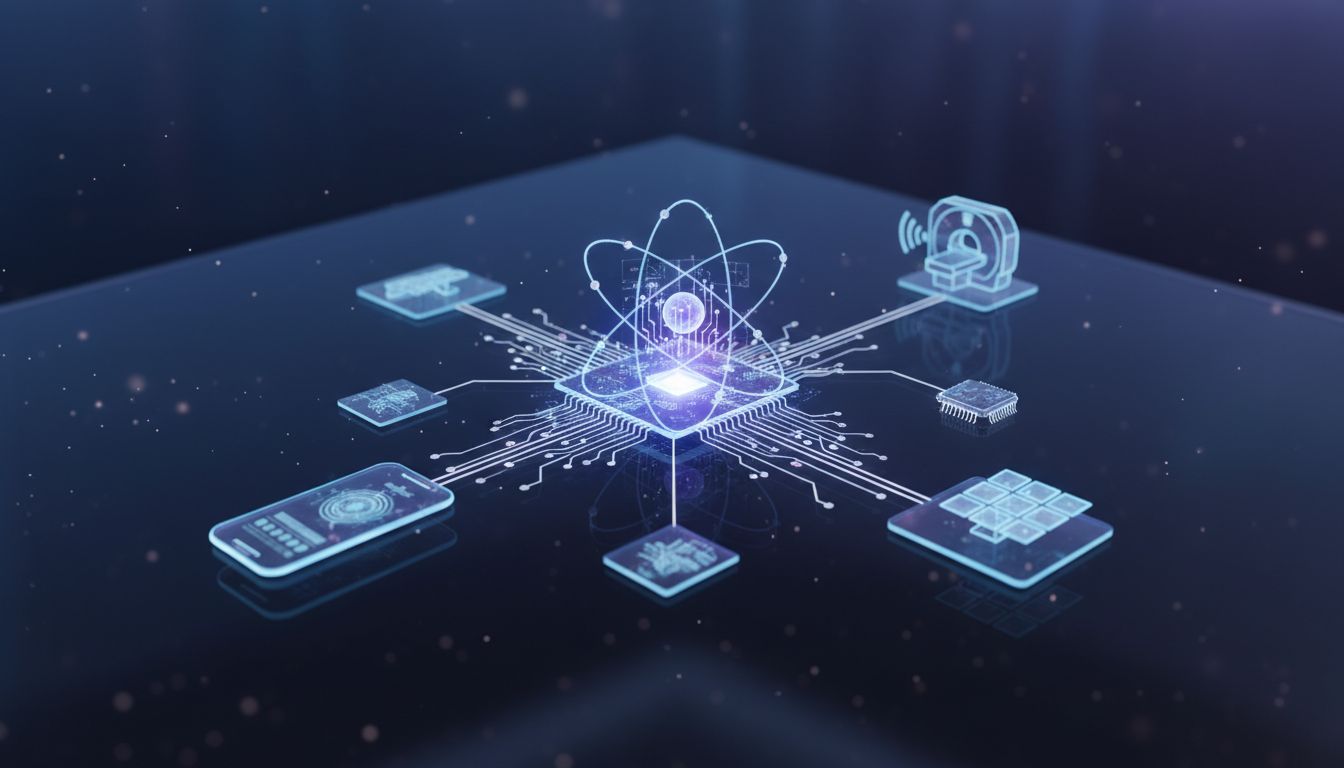
Sometimes, the most mind-bending ideas are the ones quietly shaping the world around us. Seriously—have you ever wondered why quantum physics is important? Sure, it sounds like something only scientists and math wizards care about, but the effects of quantum physics show up in places you’d never expect, from the phone in your pocket to the doctor’s office and beyond. I’ll never forget the first time I tried to explain quantum physics to my little brother—he scrunched up his face and said, “So, it’s like Harry Potter magic, but real?” Well… kind of! Let’s break down exactly how quantum physics went from bizarre theory to real-world game changer.
What Exactly Is Quantum Physics? (And Why Should Anyone Care?)
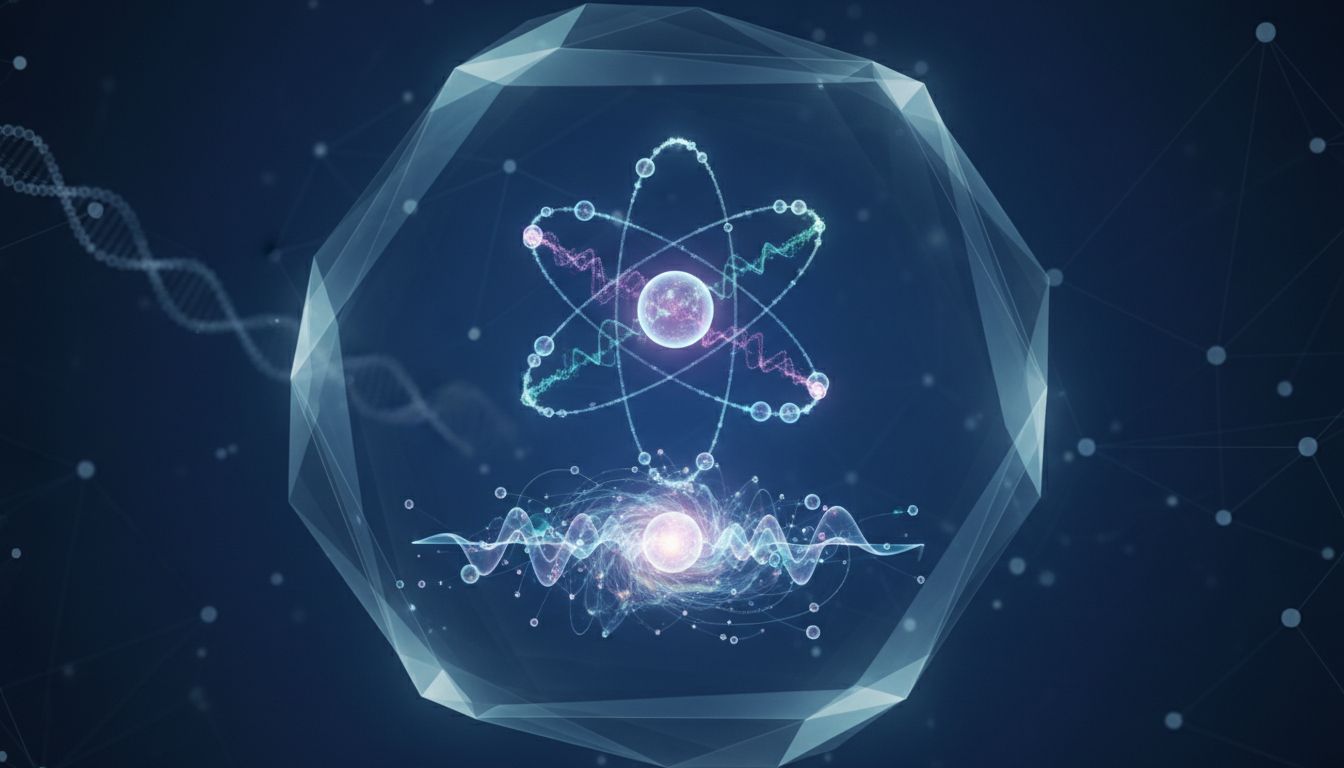
First, let’s tackle the basics. Quantum physics is the branch of science that tries to explain how the tiniest things in the universe work. We’re talking about particles smaller than atoms—like electrons, photons, and even stranger stuff. Unlike the ordinary world, where things obey straightforward rules (you throw a ball, it flies in a straight line), the quantum world is unpredictable and weird. Particles can be in two places at once, or act like both a wave and a particle simultaneously. There are even experiments where just observing something can change what happens!
But why quantum physics is important isn’t just about freaky experiments or mind games. It’s about the technology, medicine, and even the future of information that depend on these strange rules. According to Wikipedia, quantum mechanics (another word for quantum physics) underpins nearly all modern physics, chemistry, and engineering—affecting billions of lives daily.
The Quantum Revolution: How It Sneaks into Daily Life
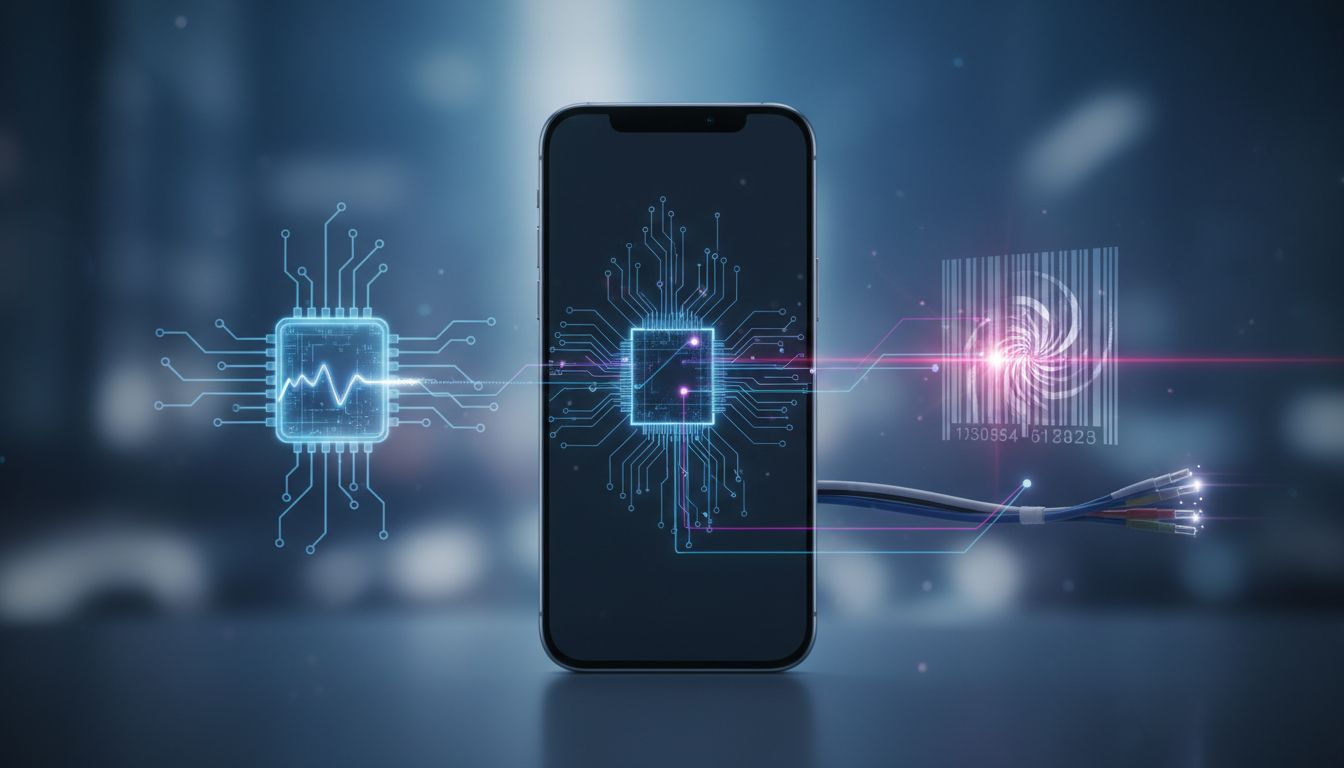
- Your Smartphone: Without quantum physics, that handy camera and fast processor wouldn’t exist. Transistors (the tiny switches that power computers) work thanks to quantum tunneling.
- Lasers: From barcode scanners to eye surgery, lasers rely on the strange behavior of photons that quantum physics describes.
- Medical Imaging: MRI machines, which help doctors see inside your body, wouldn’t be possible without quantum mechanics.
- Solar Panels: The way sunlight knocks electrons loose and generates electricity? 100% a quantum effect.
Scientists estimate that nearly 35% of the entire global economy relies in some way on products or technologies powered by quantum physics. That’s trillions of dollars, quietly at work every day (World Economic Forum, 2022). It’s a lot more than a science fair trick.
Strange Science: Three Quantum Effects That Matter

-
Quantum Superposition
This is one of my favorite quantum quirks. Imagine flipping a coin—but instead of landing as heads or tails, it’s both at the same time until someone checks. That’s what happens to particles in superposition. This principle is what might make quantum computers millions of times more powerful than today’s fastest machines. -
Quantum Entanglement
Sometimes, two particles get linked so closely that changing one instantly changes the other—even if they’re on opposite sides of the universe. Einstein called it “spooky action at a distance.” Today, scientists are using entanglement to develop unbreakable encryption for safer internet connections. -
Quantum Tunneling
Picture a tennis ball going right through a solid wall. That’s quantum tunneling, and it’s not just theory. It’s how the Sun shines, and how electronics in our gadgets work at all.
It all sounds wild, but these effects are measured, tested, and re-tested every day in labs worldwide. In fact, over 100,000 peer-reviewed scientific papers referenced quantum phenomena in just the last decade (ScienceDirect Data, 2023)! The deeper we look, the more we find quantum physics in action.
Why Quantum Physics Is Important for the Future of Technology
Let’s shift gears for a second. Think about computers. We’ve gone from machines the size of rooms in the 1950s to tiny chips with billions of transistors. That progress started slowing down—a problem known as “Moore’s Law” running out. Quantum computing promises a brand new leap forward. Instead of bits (ones and zeros), quantum computers use qubits that can be both at once. Google’s quantum computer reportedly solved a problem in 200 seconds that would take traditional supercomputers 10,000 years. Whether it’s simulating new medicines or cracking impossible math, that’s a massive deal.
But it’s not just about speed. Quantum sensors could make GPS a hundred times more precise. Secure quantum communication could safeguard bank accounts and national secrets. Even climate science could get a boost by simulating molecular interactions that today’s computers just can’t handle.
Quick Case Study: Quantum Physics in Medicine
Medical imaging is one of those quiet miracles of modern life. X-rays, MRIs, and PET scans save millions of lives each year. How do they work? At their core, they’re built on quantum rules—like how particles of light interact with tissue, or how atoms in your body “align” in a magnetic field. The National Institutes of Health estimate that advances in quantum science could improve imaging clarity by up to 40% in the next decade. Imagine detecting cancer earlier or guiding surgeons with pinpoint precision. That’s not science fiction—it’s quantum physics in action.
The Hidden Pros (and a Few Cons) of Quantum Physics
- Pro: Breakthrough Innovation
From computers to solar cells, quantum mechanics has driven massive innovation for 100+ years. - Pro: Healthcare Lifesaver
Quantum tech enables life-saving diagnostics and therapies—often before symptoms appear. - Pro: Future-Proof Security
Quantum encryption could make hacking almost impossible, protecting everything from personal messages to worldwide bank transfers. - Con: Complexity Overload
Quantum physics isn’t easy to wrap your head around. Even some scientists joke about not “really” understanding it—it’s that strange! - Con: Early-Stage Tech Bumps
Quantum computers and sensors are expensive and delicate. Turning these breakthroughs into everyday tools will take time (and a lot of money).
Everyday Analogy: The Quantum Effect in a Simple Light Switch
Here’s something people often miss: just flipping on a light switch connects you with quantum physics. Seriously! That burst of light comes from electrons “jumping” between energy levels in atoms. The rules for when—and how—they jump? All quantum. Without that, every room would still be dark after sunset. So next time you switch on the lamp, remember: you’re literally watching quantum theory glow in action.
Quantum Myths: Busting a Few Tall Tales
- Myth: “Quantum physics only matters to scientists.”
Truth: If you’ve ever used a GPS, smartphone, or microwave oven, you’ve already seen quantum effects in action. - Myth: “It’s all just theoretical—no practical use.”
Truth: The global semiconductor industry (think: all computers and phones) is entirely dependent on quantum theory. No quantum, no computers. - Myth: “Quantum physics is pure magic.”
Truth: The math is hard, but it’s been tested in thousands of experiments. It’s the most accurately verified science ever—one experiment matched quantum predictions to 14 decimal places! (Nature Physics, 2019)
Patterns and Surprises: What Quantum Physics Teaches Us About Reality
I sometimes wonder: what does it say about the universe that its tiniest building blocks act so differently from what we see every day? It’s almost as if, the closer we look, the stranger things get. But that’s also where the biggest opportunities hide. Quantum theory shows us that nature isn’t always obvious—and sometimes, the world’s best ideas come from places that seem totally bizarre at first glance.
FAQ: Quantum Curiosity
How does quantum physics affect my daily life?
Great question! You probably use dozens of devices or services every day that depend on quantum physics—like your phone, car navigation, and even the keys that unlock encrypted online accounts. If you’ve ever had an MRI at the doctor, quantum mechanics was at work inside that giant scanner. Basically, it’s everywhere—even if you don’t notice it.
Is quantum computing really going to change everything?
Probably not “everything,” but a lot! Quantum computers could solve problems that would take regular computers millions of years. That means new medicines, faster internet, and even better climate models. But these computers are still experimental—most experts say we’re one or two decades from seeing huge real-world impacts.
Can anyone learn quantum physics, or is it only for geniuses?
You definitely don’t need to be a genius. The basics, like the story of Schrödinger’s cat or the photoelectric effect, are understandable with some curiosity and patience. Sure, the math gets tricky, but the big ideas are open to everyone. (Honestly, a lot of “geniuses” admit they find it strange, too!)
What’s the biggest misconception about why quantum physics is important?
Many people think it’s totally disconnected from real life. In fact, it’s the opposite—quantum ideas power the technology, medicine, and communication we rely on. Without it, modern society would look more like the 1800s. The biggest misconception is just not realizing how quietly it shapes our world.
Will quantum technologies ever become as common as smartphones?
That’s the hope! Some technologies, like quantum sensors, are already sneaking into industry. Quantum computers will take longer—think years or maybe a couple decades for everyday use. But just like the first computers filled entire rooms, quantum tech will get smaller, cheaper, and way more common over time.
Final Thoughts: Why Quantum Physics Is Important, In One Human Moment
Let me be honest: the first time I read about quantum particles existing in two places at once, I thought, “That can’t be right.” But the more I dug in, the more I saw how these mind-twisting ideas were woven right into my phone, the local hospital, and even the light streaming through my window. Why quantum physics is important, then, isn’t just about the next big invention. It’s about humbling ourselves to the strange and beautiful mysteries of reality—and daring to turn them into something useful. Maybe that’s the real magic. So the next time someone calls quantum physics “just theory,” maybe lean in close and whisper, “Check your pocket. It’s powering your whole world.”