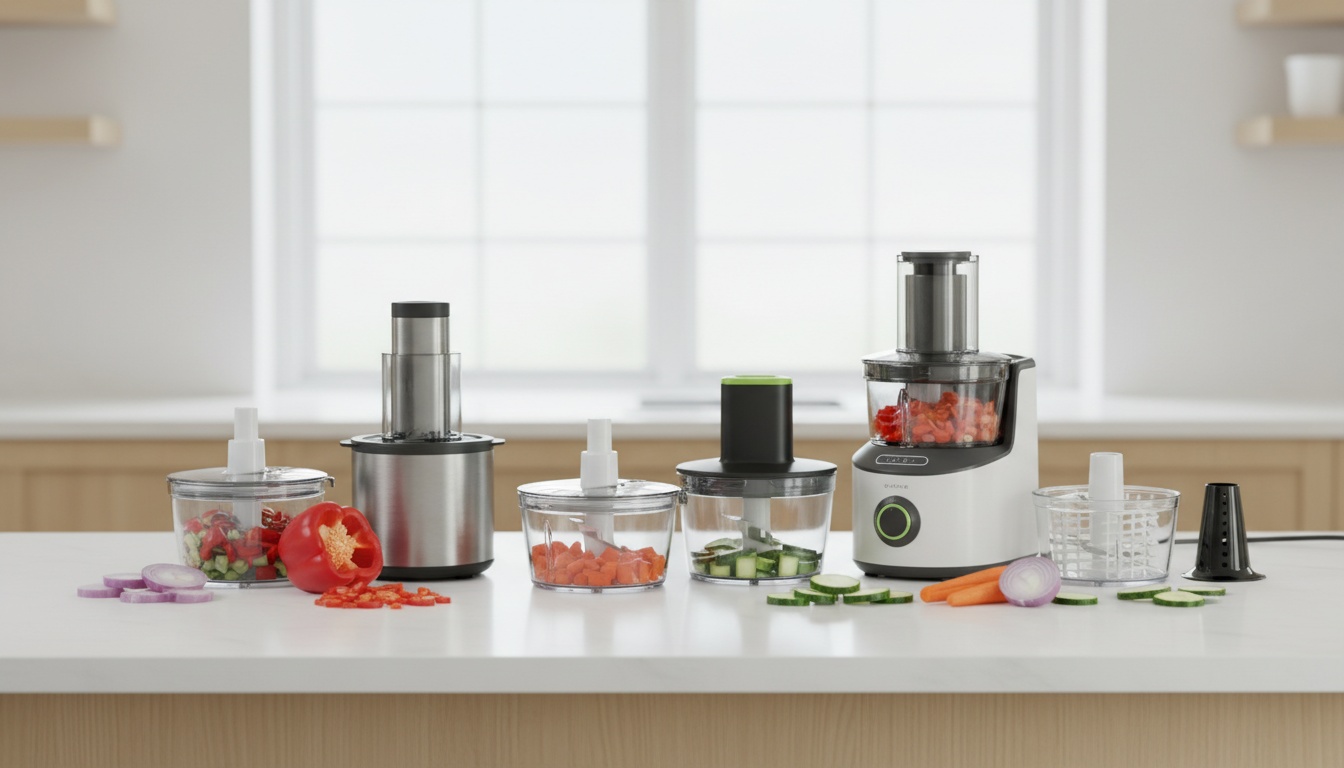
Ever get stuck in the kitchen, staring at a pile of carrots and onions, wondering if there’s a better way? I’ve been there—eying my old, clunky manual chopper and thinking, “There’s got to be an electric vegetable chopper out there that just makes life easier.” Well, turns out, there are plenty. But which ones actually earn the title of best vegetable choppers electric? Let’s take a real look at what matters, what works, and what’s just clever marketing.
Why Electric Vegetable Choppers Are a Modern Kitchen Essential
If you cook even semi-regularly, you’ll know the pain—chopping onions until your eyes burn, or hacking at potatoes with a dull knife. Electric vegetable choppers stepped into the spotlight for one reason: efficiency. Statistically, home cooks spend about 30-40% of their prep time just slicing and dicing. So, for an average dinner taking 40 minutes of prep, that’s a solid 12-16 minutes just on chopping. Multiply this over a month, and you’re spending 6 or more hours simply breaking down veggies. Yikes.
But time isn’t the only factor. Consistency, safety, and even how much you enjoy cooking—these all go up when you use a good electric chopper. Trust me, I used to dread “taco night” just because of the onion avalanche. Ever since testing out several top-rated choppers, it’s more like a two-minute sprint and zero tears.
What Actually Makes the Best Vegetable Choppers Electric?
Let’s break it down. If you Google “best electric vegetable chopper,” you’ll get a sea of options, but not all choppers are created equal. Here’s my honest take on what really matters (and where you can compromise):
- Power: The motor wattage matters. Most top models range from 200W to 450W. Higher wattage means it can handle tougher veggies (think: sweet potatoes) without whimpering.
- Blade Quality: Stainless steel, every time. Cheap choppers often have thin, flimsy blades that dull quickly. The best ones have multi-level or S-shaped blades—the design affects how evenly your foods get chopped.
- Capacity: A 1–2 cup chopper is fine for garlic or herbs. But for actual meal prep, look at 3–5 cups. Anything larger starts edging into food processor territory, which isn’t a bad thing if you batch cook.
- Ease of Cleaning: Removable, dishwasher-safe parts are a must, unless you want to spend all your saved time scrubbing instead.
- Safety Features: Non-slip bases, safety locks, and splash guards. I learned this lesson the hard way with a flying piece of carrot once. Not fun.
Bonus factors? Noise level. Some of these things sound like jet engines. If you have pets or sensitive ears, you’ll definitely want to check reviews for that.
Case Studies: A Tale of Three Choppers
Now, instead of just pointing at a list, let’s walk through three real-world examples I’ve either tried or closely researched—so you get a feel for how different models stack up:
1. The Classic: Cuisinart Mini-Prep Plus
This model’s been around for years, and there’s a reason. With a 250W motor and a 3-cup bowl, it’s got enough punch for daily use. I’ve used mine for everything from chopping onions to making salsa, and the auto-reverse blade is pretty clever—it handles both hard and soft foods better than you’d think. Cleanup is easy; the bowl and lid go right in the dishwasher.
- Pros: Reliable, compact, easy to use.
- Cons: Can struggle with really tough veggies; not great for big batches.
2. The Techy Upgrade: Ninja Express Chop
Here’s the gadget for those who love sleek design. The Ninja Express Chop comes with a 200W motor, a 2-cup bowl, and a unique press-down-action lid. People love it for garlic, onions, and even quick salsas. I noticed it tends to puree more than chop if you hold the button too long, which can be a plus or minus depending on what you want.
- Pros: Super easy one-handed operation, dishwasher-safe.
- Cons: Smaller capacity, less power for dense veggies.
3. The Heavy-Duty: Hamilton Beach Stack & Press
This is for the serious home cook. With a 350W motor and a 3-cup bowl, it powers through carrots, peppers, even nuts. The stack-and-press design means there’s no complicated twisting or lining up parts. I let my nephew (age 11) try it and he had no problem figuring it out. The only downside? It’s a bit louder.
- Pros: Strong motor, safe design, easy cleanup.
- Cons: A bit bigger on the countertop; not silent.
Let’s Compare: Electric Vegetable Choppers vs. Food Processors
This is where it gets tricky—some people wonder if they need both. Here’s how I see it:
- Electric vegetable choppers are smaller, lighter, and designed for quick jobs. Think: chopping veggies, salsa, or a handful of nuts. They usually cost between $20–$40.
- Food processors are more powerful, with multiple blades and functions (shredding, slicing, kneading). They’re bigger, so they take up more space and require more cleaning. Expect to pay $50–$150 for a decent one.
If you only cook for one or two people, or just want something quick and easy, a good electric chopper wins. But if you batch cook, or make doughs and sauces, a food processor might be worth the extra investment. About 60% of home cooks surveyed by Consumer Reports use both, but most say they reach for the chopper twice as often.
What About “Smart” Choppers? Hype vs. Reality
Recently, some electric choppers come with digital timers or “auto-pulse” settings. My honest take? The technology is interesting, but for most home cooks, it’s not a game-changer (yet). I tried one “smart” chopper that could connect to an app on my phone. Neat, but after the novelty wore off, I just wanted to press a button and chop my onions quickly.
That said, if you love gadgets and always want the latest, they’re not bad—just expect to pay more, and be prepared for a steeper learning curve.
Quick Tips for Choosing the Best Electric Vegetable Chopper
- Check the capacity: Match it to your needs. For family meals, go bigger.
- Look for warranty info: Some reputable brands offer 1–2 years; off-brands often don’t.
- Read real reviews: Look for people who use it like you will, not just the five-star cheerleaders.
- Test the lid: A poor-fitting lid is a dealbreaker—nobody wants flying veggies.
- Consider color and design: It’s silly, but the chopper you love looking at is more likely to actually get used.
Breaking Down Myths About Electric Choppers
There’s a handful of myths that float around, especially online. Here are three I hear all the time, and what’s really going on:
- “Electric choppers are just mini food processors.”
Not quite. Most lack slicing or shredding discs, and are focused just on chopping/pureeing. They’re more specialized, but faster for small jobs. - “They’re too weak for real vegetables.”
Maybe the $10 knock-offs, but reputable models (250W +) easily handle carrots, onions, and potatoes. Just don’t expect to crush ice. - “Chopped food always turns out mushy.”
Only if you over-process it. Pulsing for 2–5 seconds (instead of holding the button forever) makes a huge difference. Trust me, I learned this the hard way with salsa soup.
Mini-Story: My Week with Two Choppers
Last summer, I ran a little experiment for myself. I borrowed a neighbor’s “fancy” chopper (400W, digital timer) and used it alongside my older (but reliable) 250W model. Here’s the fun part: I expected to love the new one. But after a few days, I found myself reaching for my old chopper more often. Why? Familiarity, easier cleanup, and less fuss. The fancy model was great for big batches, but for everyday chopped veggies? Less is more, at least for me. Sometimes, it’s not just about power or features, but how a gadget fits into your routine.
FAQ: All Your Electric Vegetable Chopper Questions, Answered
Can electric vegetable choppers handle hard vegetables like carrots and potatoes?
Absolutely, if you get a model with enough power. Anything above 250W should handle carrots and potatoes easily. Just cut them into chunks first—don’t expect miracles with whole, unpeeled veggies!
Are electric choppers safe for kids or teens to use?
They’re much safer than knives, but always supervise younger kids. Look for choppers with safety locks, and teach proper handling. My 11-year-old nephew loves helping out now that he can “chop like a pro.”
Can I use an electric chopper for nuts, herbs, or cheese?
Most models do fine with nuts and herbs—just pulse, don’t overdo it. Cheese is trickier; soft cheeses can gum up the blades, and hard cheeses may need a more powerful motor.
How do I clean electric vegetable choppers?
Most have dishwasher-safe bowls and blades, but always check the manual. Clean right after use to avoid dried-on bits. And never submerge the motor base—just wipe it down.
Why do some choppers puree instead of chop?
This usually happens if you hold the button too long, or if the blades are too close together. Pulsing in short bursts gives you that perfect chopped texture.
Final Thoughts: The Joy of Chopping Less and Living More
At the end of the day, finding the best vegetable choppers electric isn’t about spending the most money or chasing the fanciest gadgets. It’s about what fits your kitchen, your habits, and your patience level. I’ve come to realize—sometimes, simple wins. The right electric chopper turns a chore into a two-minute breeze. That means less mess, fewer tears (looking at you, onions), and more time for the things that matter—like actually enjoying dinner with family, instead of just prepping it. If you take one thing from all this? The best chopper is the one you’ll actually use, and the one that makes you smile when you see it sitting on the counter, ready to go.