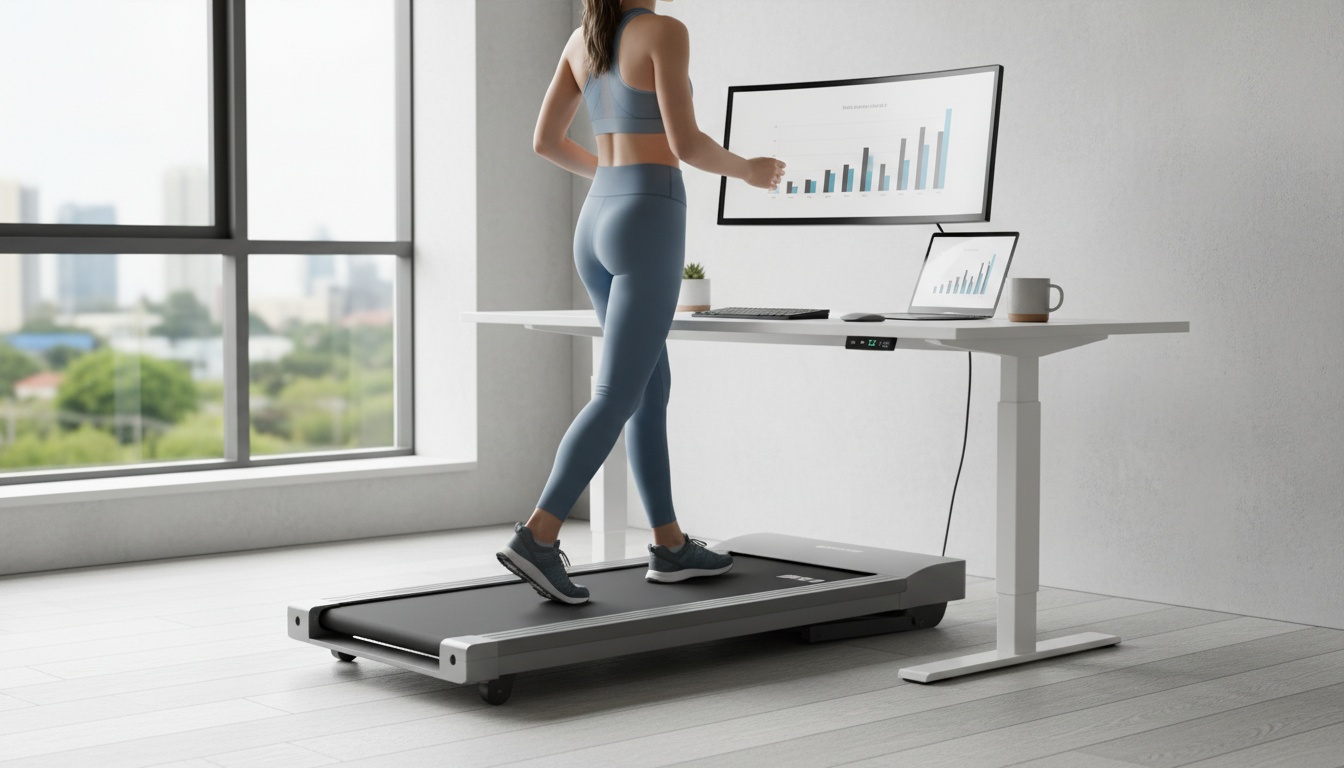
If you’re hunting for the best mini treadmills for desk setups, you’re probably tired of sitting all day, but you also don’t want a giant gym machine dominating your living room. I get it. Most of us live in normal spaces, not giant tech offices with nap pods and full gyms.
In this guide, we’ll walk (pun fully intended) through how mini and under-desk treadmills really work in everyday life — not just in glossy ads. We’ll look at what matters, what doesn’t, and how to pick a treadmill that you’ll actually use instead of letting it become a very expensive clothes rack.
We’ll cover:
- How under-desk treadmills can actually change your workday
- Key features that separate good models from frustrating ones
- Mini case studies of different “types” of users
- Pros and cons of popular designs (folding, flat, with handles, etc.)
- Practical tips to make walking and working realistic
And yes, we’ll keep the language simple enough for an 8th grader to follow, but with adult-level insight and a bit of honest opinion along the way.
Why Mini Treadmills for Desk Use Are Suddenly Everywhere
Under-desk treadmills aren’t new, but they’ve exploded over the last few years. Remote and hybrid work made people realize something uncomfortable: sitting for 8–10 hours a day is… not great.
Research has linked long sitting time with higher risks of obesity, type 2 diabetes, and heart disease. The World Health Organization estimates that physical inactivity contributes to roughly 5–10% of major non-communicable diseases worldwide. That’s not a tiny number. Physical inactivity is literally considered a global health risk factor.
On the flip side, studies have found that even light-intensity walking throughout the day — think 1–2 mph — can improve blood sugar control, reduce stiffness, and slightly boost mood and focus. Not a miracle cure, but a real shift.
So instead of trying (and often failing) to hit the gym after work, a lot of people are saying: “What if I just move more while I work?” Enter mini treadmills for desks.
What Makes the “Best” Mini Treadmills for Desk Use?
Let’s be honest: the best mini treadmill for you might be terrible for someone else. A software engineer on Zoom 6 hours a day has different needs than a writer who answers emails and listens to podcasts.
Still, there are some core features that almost always matter. Instead of starting with brand names, let’s start with criteria. Once you know what to look for, every Amazon listing suddenly becomes much easier to judge.
1. Walking Area Size (Deck Length and Width)
This is the most underrated feature. If the walking belt is too short or narrow, you’ll feel like you’re balancing on a balance beam.
- Deck length: For most adults, at least 39–43 inches is comfortable for walking. If you’re tall (over ~6’1”), aim closer to 45–50 inches.
- Deck width: Under-desk treadmills are usually 14–17 inches wide. Wider feels safer, especially if you tend to drift while typing.
Think of it like this: if you need to stare at your feet to feel safe, you won’t use it for long. A slightly larger deck is often worth the extra money and space.
2. Noise Level (Your Coworkers Will Thank You)
Most mini treadmills claim to be “whisper quiet.” Many are not. Noise comes from two places:
- The motor (a humming sound)
- Your footfalls (thumps from impact)
For normal home use, look for something under about 55–60 dB at 2–3 mph. That’s around the level of a quiet conversation or background noise in a library. Reviews are your friend here — people love to complain when treadmills are loud.
If you’re often on calls, also think about your desk: a wobbly standing desk can amplify sound and vibration. A simple treadmill mat can cut some of that down.
3. Speed Range (But Don’t Overthink It)
Here’s something people often miss: for desk use, you rarely need high speeds.
- Most people work comfortably at 1–2 mph.
- Some go up to 2.5–3 mph for short bursts or breaks.
A mini treadmill that goes up to 4–6 mph is great if you also want light jogging after work, but higher speed doesn’t automatically mean “better” for desk use. What matters more is how smooth the belt feels at low speeds and how stable the unit is.
4. Weight Capacity and Stability
Most under-desk treadmills list a maximum user weight between 220–300 lbs. Even if you’re well under that limit, a higher capacity often means a stronger frame and less wobble.
If you feel the deck flexing or the sides shaking, that’s not just annoying — it can subtly tire your ankles and hips, especially over long workdays.
5. Portability and Storage
Mini treadmills are supposed to be small and portable, but some are “mini” in name only. The big questions:
- Does it fold or is it a flat slab?
- Does it have wheels so you can roll it under a bed or couch?
- Can you lift it alone, or do you need help? (Many weigh 45–65 lbs.)
If you live in an apartment or share a space, ease of storage is almost as important as the walking features. The “best” mini treadmill that you can’t move is basically furniture.
6. Controls and Display (Simple Is Good)
Most under-desk treadmills use a small LED display and a remote. Fancy features aren’t necessary, but a few things help:
- Clear speed display (mph or km/h)
- Quick start/stop button on the remote
- Basic time, distance, and calorie estimates
Some newer models connect to apps via Bluetooth and let you track steps or join virtual walking sessions. Nice to have, but not essential for everyone. I’d prioritize reliability over “smart” features.
Types of Mini Treadmills for Desk Use (And Who They Fit)
Not all mini treadmills look or feel the same. Let’s break them into a few broad categories so you can see where you fit.
1. Flat Under-Desk Treadmills (No Handles)
These are the “classic” under-desk models: no upright handles, low profile, and usually light enough to roll under a bed.
Best for:
- People with standing desks
- Folks who want to walk while typing or reading
- Small spaces where every inch counts
Pros:
- Very space-efficient and easy to store
- Clean look; doesn’t scream “gym equipment”
- Often lighter and cheaper
Cons:
- No handles = less balance support
- Not ideal if you want to run or do intense workouts
- Some models feel bare-bones
If your main goal is slow walking while answering emails or watching videos, this category is where most of the best mini treadmills for desk use live.
2. 2-in-1 Folding Treadmills (With Optional Handles)
These have a foldable upright bar or handles. Fold them down, and they work like a flat under-desk treadmill. Fold them up, and you get more stability or light jogging.
Best for:
- People who want both desk walking and light workouts
- Households where more than one person will use it
Pros:
- More versatile: walk while working, then jog in free time
- Handles help with balance, especially for older users
Cons:
- Taller and bulkier when handles are up
- Usually heavier and a bit harder to store
- More moving parts = more things that can break
These are a nice “compromise” if you’re unsure whether you’ll actually walk while working, but you definitely want something for fitness.
3. Compact Traditional Treadmills
These look like shrunken regular treadmills: thick base, full handles, often an incline option. They’re not as sleek under desks, but some people still use them that way.
Best for:
- People who care more about workouts than desk use
- Those who don’t mind a bigger footprint
Pros:
- More powerful motors and sturdier frames
- Better for faster walking or jogging
Cons:
- Not truly “mini”; may not fit under a desk comfortably
- Harder to move and store
If your main goal is productivity + movement, I’d lean toward a flat under-desk or a 2-in-1 folding design instead.
How to Match a Mini Treadmill to Your Work Style
Let’s step away from specs for a moment and talk about real life. Here are three quick “profiles” that might help you see where you fall.
Case Study 1: The Zoom-Heavy Professional
Profile: You’re on video calls or phone calls multiple hours a day. You need to look and sound professional, not like you’re on a bumpy ride.
What usually works best:
- Flat under-desk treadmill with quiet motor
- Speed around 1–1.5 mph during calls
- Good desk stability (no wobbling camera)
One trick here: many people walk only during non-video parts of their day (emails, planning, reading) and stand or sit during key meetings. Even 60–90 minutes of walking spread through the day adds up to 3,000–5,000 extra steps.
Case Study 2: The Focused Writer or Coder
Profile: You do deep work: writing, coding, design, or anything that needs serious concentration.
What usually works best:
- Start with very slow speeds: 0.8–1 mph
- Use the treadmill more for lighter tasks at first: email, note review, watching tutorials
- Consider a model with a wider deck to reduce “drift anxiety” while you think
Some people find they can’t do heavy thinking and walking at the same time. Others adapt after a week or two. The brain is surprisingly good at adjusting to a slow, steady rhythm.
Case Study 3: The “I Hate Exercise but I’m Tired of Feeling Sluggish” Person
Profile: You don’t love workouts, but you’re tired of feeling stiff and tired all the time. You want something low-pressure.
What usually works best:
- Simple, flat under-desk treadmill with easy start/stop
- Goal of 20–40 minutes of total walking spread through the day
- No pressure to hit huge step counts — just consistent small wins
I sometimes think of these mini treadmills less like “fitness machines” and more like “anti-rust tools.” They keep your joints and energy from getting stuck.
Key Metrics to Compare When Shopping
When you’re scrolling through product pages, it’s easy to get lost in marketing language. Let’s simplify. Here are the numbers that usually matter most for the best mini treadmills for desk use:
- Deck size: Aim for ~40″ x 15″ or larger if space allows.
- Max speed: 3–4 mph is usually enough for desk use.
- Weight capacity: Try for at least 240–265 lbs if you want long-term stability.
- Noise level: Under 60 dB at normal walking speeds is ideal.
- Unit weight: Under 60 lbs makes it easier to move around solo.
Also pay attention to warranty length. A 1-year warranty is common; 2 years or more on the motor is a nice sign the company trusts its product.
Practical Pros and Cons of Desk Mini Treadmills
Before you click “buy,” it’s worth being honest about what these machines do well — and where they fall short.
Benefits You’ll Actually Notice
- More daily steps without “finding time”
If you walk 1.5 mph for just 60 minutes total during your workday, that’s roughly 2,500–3,000 steps. Do that 4 days a week, and you’ve added around 10,000–12,000 steps without separate workout sessions. - Less stiffness and back pain
Many users report less lower back stiffness and fewer “I feel like a pretzel” moments, especially in the afternoon. Movement helps circulation and keeps your joints from locking up. - Mood and focus bumps
Light movement can increase blood flow to the brain and slightly improve mood. It’s not a sudden transformation, but a lot of people describe feeling “less foggy” and more alert.
Drawbacks People Don’t Always Talk About
- Typing accuracy can drop at first
Especially if you walk faster than ~1.5 mph. Expect a learning curve. Some people find they’re fine after a week; others keep a lower speed for most tasks. - It does take floor space
Even mini treadmills are usually around 45–55 inches long. You’ll need to rearrange a bit, especially in small apartments. - Setup and noise worries
While most arrive mostly assembled, there’s still unboxing, finding a power outlet, and testing noise. In shared spaces, you might need a mat and some negotiation with roommates or family.
How to Actually Use a Mini Desk Treadmill Without Burning Out
Here’s something people often miss: buying the “perfect” treadmill doesn’t matter if your plan for using it is unrealistic. A few simple habits make a big difference.
Start with Tiny, Almost Laughable Goals
Instead of saying, “I’ll walk 3 hours a day while working,” try:
- 10–15 minutes in the morning while checking email
- 10–15 minutes after lunch to fight the energy crash
- Optional 10–15 minutes in the late afternoon during lighter tasks
That’s only 20–45 minutes total. But over weeks, the consistency matters more than heroic one-time efforts.
Use the Right Tasks for Walking Time
Walking is easiest during:
- Emails and messages
- Watching trainings or tutorials
- Brainstorming or planning sessions
- Listening to calls where you’re not presenting
For tasks like intense coding or editing, you might pause the treadmill, finish the deep work, then resume walking afterward.
Pair It with a Real Standing Desk Setup
Trying to use a mini treadmill with a fixed-height sitting desk is… rough. You’ll end up bending your wrists and neck. If you don’t already have one, consider a standing desk or at least a solid adjustable riser for your laptop or monitor.
If you’re curious about building a more comfortable work setup overall, resources like ergonomic workspace guides can help you think about your whole environment, not just the treadmill.
Red Flags to Watch Out For When Buying
Let’s quickly talk about what to be skeptical of when you’re comparing the “best mini treadmills for desk” online.
- Unrealistic weight capacities
If a super-light, flimsy-looking treadmill claims a 330+ lbs capacity but weighs 35 lbs itself, be cautious. Physics still exists. - Very short decks
Anything under about 35–37 inches long can feel cramped for average-height adults, especially at speeds above 1 mph. - No real reviews or only vague 5-star ones
Look for detailed, specific reviews that mention noise, comfort, and how long they’ve used it. - No warranty info or return policy
With moving parts and electronics, it’s smart to have at least a 1-year warranty and a clear return window.
Mini Treadmill vs. Walking Pad vs. Regular Treadmill
You’ll see different names thrown around: “mini treadmill,” “walking pad,” “under-desk treadmill.” People often use them interchangeably, but there are small differences:
- Walking pad: Usually very flat, low-profile, meant for walking only.
- Under-desk treadmill: Similar to a walking pad, often with slightly better build and maybe a higher speed range.
- Mini treadmill: A broader term that can include 2-in-1 folding and compact traditional treadmills.
For working at a desk, the “walking pad” and “under-desk treadmill” style is usually the sweet spot: low to the ground, simple, and easy to store.
Frequently Asked Questions About Mini Desk Treadmills
Can I really work and walk at the same time?
Yes, but it depends on the type of work and the speed. Most people can handle email, reading, and light tasks at 1–1.5 mph with no problem after a short adjustment period. Deep focus tasks can be trickier. Many users switch between walking and standing throughout the day instead of walking nonstop.
Will a mini treadmill help me lose weight?
It can help, but it’s not magic. Walking an extra 30–60 minutes a day might burn roughly 80–200 extra calories, depending on your pace and body weight. Over weeks, that can add up, especially if paired with decent eating habits. But the biggest benefits are often energy, mobility, and health markers, not dramatic weight loss alone.
Is it safe to use a mini treadmill every day?
For most people, yes — especially at low speeds. Think of it like gentle daily movement rather than a big workout. If you have joint issues, heart conditions, or other medical concerns, it’s always smart to talk with a healthcare professional first. Start slow, listen to your body, and gradually build up time.
How long do these treadmills usually last?
With normal use, a decent under-desk treadmill can often last 3–5 years or more. Lifespan depends on build quality, your weight, how often you use it, and basic maintenance (like keeping it clean and occasionally lubricating the belt if the manual says so).
Do I need special shoes?
You don’t need fancy shoes, but you do want comfort. Lightweight sneakers or walking shoes are ideal. Walking barefoot or in socks might feel okay for short periods, but it’s not great for longer sessions, especially if you’re on the heavier side or have foot issues.
Will this annoy my downstairs neighbors?
It can, depending on your building. Mini treadmills are usually quieter than running treadmills, but your footsteps can still create vibration through the floor. A thick treadmill mat and slower speeds help. If you live in an older building with thin floors, it’s worth testing at a time you can ask your neighbor honestly how much they hear.
How much should I spend on a mini under-desk treadmill?
As of recent trends, many decent models fall in the $250–$600 range. Below that, you risk poor build quality; above that, you’re usually paying for brand, extra features, or stronger motors. If you’re just starting out and not sure you’ll use it much, something in the lower-middle of that range is often a good test.
A Quiet Reflection: Movement That Fits Real Life
I sometimes wonder how many of us would move more if the “fitness world” felt less like a performance and more like a series of small, kind choices. A mini treadmill under your desk isn’t a dramatic transformation. It won’t turn your life into a highlight reel. But it can quietly nudge your days in a better direction.
The best mini treadmills for desk use aren’t just the ones with the flashiest features. They’re the ones that fit your space, your work style, and your actual energy levels. The ones you turn on without thinking too hard about it. The ones that make walking feel as ordinary as opening your laptop.
If you end up getting one, my honest suggestion is this: don’t chase perfection. Start small. Walk slowly. Let it become part of your routine like coffee or brushing your teeth. Over time, those slow, steady steps might change more than you expect — not with drama, but with quiet, consistent momentum.