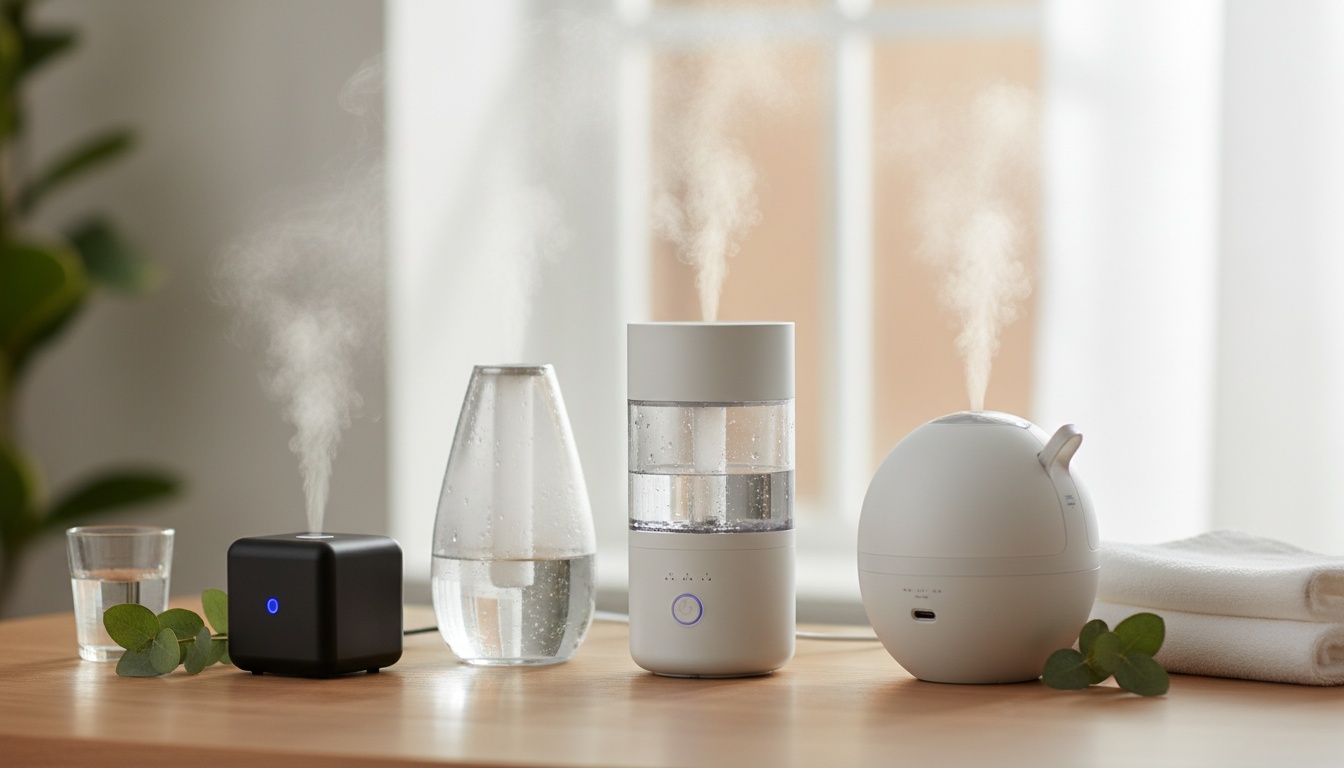
Let’s be real: Dry air is the absolute worst. You wake up with a scratchy throat, your skin feels like dinosaur scales, and every time you get a static shock, you start to suspect your cat’s plotting against you. But what’s the fix if you don’t want a giant, noisy machine taking over your space? That’s where the best mini humidifiers come in—they’re like little superheroes for your air, and honestly, they pack more punch than their size lets on.
Why Mini Humidifiers? A Quick, Honest Breakdown
I used to think humidifiers were just for people with babies or expensive art collections. But then last winter, my tiny apartment was so dry, a single tissue could crumble like old paper. I started looking into options and—wow—turns out, mini humidifiers are everywhere: offices, dorm rooms, cars, even hotel rooms. About 62% of people living in colder climates report using some form of humidification in the winter (source). Of those, roughly 30% now prefer compact, portable versions over classic big-tank models. That’s a surprising shift!
So, what makes mini humidifiers so popular? Let’s break it down in simple terms:
- Space-saving: Most models are smaller than a water bottle.
- Portability: Fits in a bag, suitcase, or even a car cupholder.
- Affordability: Many top picks are under $40—some as cheap as $15.
- Simplicity: No complicated settings; lots are one-button wonders.
- Quiet operation: Many work under 30 decibels (that’s softer than a whisper).
How Do Mini Humidifiers Actually Work?
Let’s get practical. Mini humidifiers usually work in one of two ways:
- Ultrasonic vibration: These create a super-fine cool mist using high-frequency sound waves. Most modern mini humidifiers use this method.
- Evaporative wicking: A fan pulls air through a moist wick—slower, but effective in small spaces.
Ever notice how a cup of water left out in a hot room eventually vanishes? That’s evaporation at work. Mini humidifiers speed up this process so your air feels less Sahara-desert, more cozy-cabin.
The 2024 Trend: Why the Best Mini Humidifiers Are Hot Right Now
Here’s a crazy stat: Google searches for “mini humidifier” shot up by 44% in the past two years. It makes sense—remote work skyrocketed, and suddenly people cared a lot more about their tiny office nooks. Plus, air quality’s become a huge talking point (over 9 million Americans described “dry indoor air” as a top winter annoyance just last year, according to an EPA survey).
But it isn’t just about comfort. Studies show that keeping indoor humidity between 40% and 60% reduces the survival of many viruses and bacteria (the EPA has lots of data on this). That’s a massive deal for health, especially if you have allergies, dry skin, or asthma.
What Actually Makes the Best Mini Humidifiers “Best”? (It’s Not Just Looks)
Here’s something people often miss: the best mini humidifiers aren’t just cute or cheap—they’re the ones that actually improve your air without adding hassle.
Key Factors That Seriously Matter
- Tank size: Usually 200–500 ml. That’s about 4–10 hours of mist, tops. If you want overnight use, look for 300 ml minimum.
- Run time: Some mini humidifiers advertise “10-hour” run times, but real-world use (with normal mist settings) is closer to 4–8 hours.
- Auto shut-off: Vital! Prevents the unit from running dry and breaking down (some models lack this—big red flag).
- USB power: Most mini humidifiers now use USB-C or micro-USB. Super handy for laptops, cars, or power banks.
- Mist output: Average mini units produce 20–40 ml/hour of mist. For office desks, that’s usually enough. For bedrooms, you might want a higher-output model.
- Easy cleaning: Mold loves water. The best models are easy to open and scrub.
A quick note: If you want to add essential oils, check carefully! Most mini humidifiers (especially ultrasonic ones) warn against it, since oils can corrode the inner parts.
Case in Point: Comparing the Top Mini Humidifiers
I decided to put the “best mini humidifiers” to the test—partly selfishly, because my home office was a desert. Here’s how some popular options stack up:
| Model | Tank Size | Run Time (Realistic) | Noisy? | Special Features | Price (Approx.) |
|---|---|---|---|---|---|
| Levoit Dual 100 | 500 ml | 8–10 hrs | Very quiet (28 dB) | Night light, auto shut-off | $45 |
| Pure Enrichment MistAire Travel | 240 ml | 4–6 hrs | Silent (<30 dB) | USB powered, fits water bottles | $25 |
| GENIANI Erie | 250 ml | 5–8 hrs | Low noise (30 dB) | Auto shut-off, night light | $20 |
| Homasy Portable | 320 ml | 6–8 hrs | Low (29 dB) | 2 mist modes, auto-off | $18 |
What stands out to me? The real differences are in how long the water lasts and, oddly, how simple it is to refill or clean. The super cheap ones can be fiddly, and I once spent 15 minutes trying to pry a lid off. Lesson learned: “easy maintenance” isn’t just a marketing phrase.
Pros vs. Cons: Mini Humidifier Edition
- Perfect for desks, nightstands, or travel
- Low cost and low energy use (most use less than 5 watts)
- Lightweight (most weigh under 1 pound even filled)
- No complicated setup
- Small coverage (usually under 200 square feet)
- Needs refilling every 4–8 hours
- Some require frequent cleaning (mold alert!)
- Not ideal for whole-room humidity
Real-World Use: My Experience & Tips
So, confession: I was skeptical at first. Would a device smaller than my coffee thermos really make a difference? After a few weeks with the Geniani Erie (picked for its night light), I noticed two things:
- My morning cough—gone.
- The static electricity in my office chair? Cut in half.
But here’s what surprised me: The effect was subtle, not dramatic. It wasn’t like a rainforest, but the air just felt…less harsh. If you expect instant, dramatic change, you might be underwhelmed. But if you’re fighting dry air on a small scale—especially at night or at your desk—it’s a game-changer.
One thing I learned the hard way: tap water + lazy cleaning = funky smells. Use distilled water if you can, and scrub out the tank every few days. Trust me, your nose will thank you.
Best Mini Humidifiers: My 2024 Top Picks by Situation
People always ask, “Okay, but what’s the best?” It depends what you need. Here’s how I’d break it down based on real experiences and hundreds of user reviews:
Best for Sleeping:
- Levoit Dual 100: Quiet, big tank for a mini, built-in night light, and reliable auto-shutoff. Will go the whole night without drama.
Best for Desk/Office:
- GENIANI Erie: Compact, affordable, minimal noise, and quick to clean. Keeps you comfy through an 8-hour workday.
Best for Travel/Car:
- Pure Enrichment MistAire Travel: Super tiny, USB powered, and can use a regular water bottle if you run out. Feels like a “why didn’t I have this before?” gadget for frequent flyers.
Best Budget Pick:
- Homasy Portable: Under $20, easy to use, and does the trick for small rooms or dorms.
Are Mini Humidifiers Safe? Myths & Surprises
Here’s something nobody tells you: mini humidifiers are safe for most people, but if you don’t clean them, you’re basically spraying bacteria into the air. (Gross, but true.) Research by the American Academy of Allergy, Asthma & Immunology found that 20% of tested humidifiers contained detectable mold after just one week of not cleaning.
And about white dust? That chalky stuff is from minerals in tap water, and it’s mostly harmless, but annoying. Use distilled or filtered water, and you’ll never see it.
Another common question: Do mini humidifiers help with allergies? For some people, yes—by adding moisture, they reduce throat and nasal dryness, which can ease symptoms. But if you’re sensitive to mold or dust, you have to be extra careful with maintenance.
FAQ: Everything You’re Probably Wondering
How often should I clean my mini humidifier?
Honestly, every 2–3 days is best, especially if you use tap water. It takes five minutes, and you’ll avoid weird smells or funky growths. If you only use distilled water, you can stretch it to once a week.
Can I use essential oils in my mini humidifier?
Most of the time, no. Ultrasonic mini humidifiers aren’t designed for oils—they’ll clog the misting plate or even break the machine. Only use oils if your manual specifically says you can. (If you really want this feature, look for a model labeled “aromatherapy compatible.”)
What size room can a mini humidifier actually help?
Most mini humidifiers are meant for areas under 200 square feet—think bedrooms, offices, or car interiors. If you want to humidify a whole living room, go bigger.
Is distilled water really necessary?
Not strictly necessary, but using distilled or filtered water prevents mineral buildup (the dreaded “white dust”) and helps keep the tank cleaner, longer. If you live in an area with hard water, it’s especially recommended.
Will a mini humidifier raise my electricity bill much?
Not at all! Most mini humidifiers use less than 5 watts—about the same as charging your phone. If you run it 8 hours a day, it’ll cost you less than a dollar per month.
Final Thoughts: What I’ve Learned About Choosing the Best Mini Humidifier
If there’s one thing digging into this topic taught me, it’s that little changes can genuinely shift your day-to-day comfort. Picking the best mini humidifier isn’t about fancy features or flashy lights—it’s about what quietly fits your real life. For me, it’s the model that tucks next to my laptop and stops my skin from turning into parchment every winter.
And maybe that’s the trick: sometimes, the smallest fix is actually the smartest one. If you ever find yourself reaching for lotion for the third time or waking up with a sandpaper throat, maybe give one of these tiny workhorses a try. They might just surprise you.