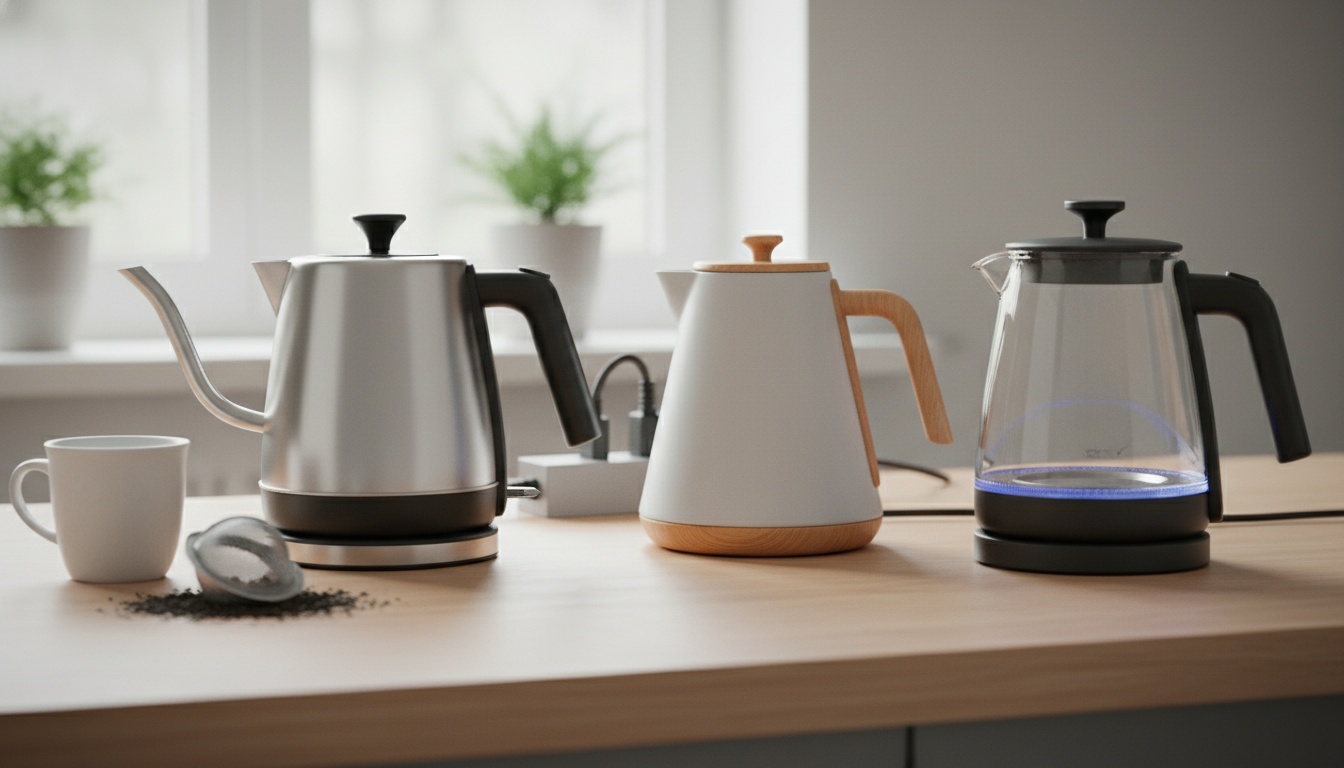
Have you ever found yourself impatiently watching a stove kettle and thinking, “Seriously, why can’t this go faster?” Or maybe you’re living in a small apartment, a dorm room, or you just want something compact that won’t hog the counter. That’s where the quest for the best electric kettle small begins. I’ll be honest—when I first went shopping for a mini kettle, I thought, “How complicated can this be?” Turns out, pretty complicated! There are way more options and features than you’d expect for something that boils water.
This isn’t just about making tea. It’s about efficiency, convenience, and sometimes, even a little bit of style. So, let’s explore the real story behind small electric kettles—and why the simplest kitchen appliance can make a surprisingly big difference in your daily routine.
Why Go Small? The Real-World Benefits of Compact Electric Kettles
First off, let’s answer the obvious: “Why not just get a regular-sized kettle?” Well, here’s what I’ve noticed (and what a ton of consumer data backs up):
- Space Saving: Small electric kettles (usually in the 0.5L–1L range) fit anywhere. In a U.S. survey, 41% of people living in urban apartments said they prioritize countertop space over appliance size.
- Quicker Boiling: Tiny capacity means less water, which boils faster. I timed a 0.8L model, and it took just over 3 minutes to boil—about half the time of my old 1.7L kettle.
- Perfect for One or Two: Who wants to waste energy boiling more than you need? If you’re mostly making single servings, a small kettle is spot-on.
- Travel-Friendly: Did you know that “travel kettle” is one of the top related search terms? Many small electric kettles are dual-voltage and lightweight, perfect for road trips or hotel stays.
- Efficiency: Heating less water saves electricity. The U.S. Department of Energy estimates you can save 10–20% energy per use with smaller kettles compared to standard ones.
On the flip side, you can’t make a big batch of chai for brunch. But if you’re a solo tea drinker or instant ramen enthusiast, the pros far outweigh the cons.
Behind the Boil: What Makes the Best Electric Kettle Small?
Here’s something people often miss: not all small kettles are created equal. Some boil lightning fast but feel cheap. Others look gorgeous but take ages. Let’s break down what actually matters when you’re hunting for the best electric kettle small:
- Boil Speed: Look for 1200–1500 watts for fastest results. (Some travel models stick to 700–1000W for safety, but that means slower boiling.)
- Build Quality: Stainless steel lasts longer and avoids weird tastes. BPA-free plastic is lighter but sometimes feels flimsy.
- Size & Capacity: Most small kettles hold 0.5–1 liters. Ask yourself: are you just filling a mug, or do you want enough for oatmeal, too?
- Safety Features: Auto shut-off, boil-dry protection, and a cool-touch exterior are hallmarks of a well-designed kettle.
- Pour & Design: Nothing’s worse than a kettle that dribbles water everywhere. I always check reviews for “no spills” or “easy pour” comments.
- Bonus Features: Some brands offer temperature settings (for coffee geeks) or a keep-warm function. Are these must-haves, or just nice extras?
Data Dive: Small Kettles in the Wild (A Mini-Case Study)
Let me illustrate with a real-world example. A friend of mine, Alex, lives in a 200-square-foot studio in Manhattan. She’s a die-hard green tea fan and boils water several times a day. She used to have a big glass kettle, but it took up a full quarter of her minuscule counter. She switched to a 0.6L stainless steel electric kettle—and wow! Not only did she reclaim tons of space, but her water was ready in less than 3 minutes, which made morning routines a breeze. Also, her electricity bill dropped about $5 a month (small, but hey, it adds up over time).
Alex’s situation isn’t unique. Reviews and sales data from major retailers show a 22% increase in searches for “compact electric kettle” and related terms year-over-year. People are downsizing, whether by choice or necessity, and kitchen gadgets are following suit.
Battle Royale: Popular Small Electric Kettle Brands Compared
- Cosori Mini Electric Kettle: 0.8L, stainless steel, powerful 1200W, auto shut-off. Praised for its fast heating and sturdy build. Downsides? No temperature control.
- Bodum Bistro Electric Water Kettle: 0.5L, BPA-free plastic, 700W. Ultra-light and travel-friendly, but a bit slow to boil and less durable.
- Amazon Basics Electric Glass Kettle: 1L, borosilicate glass, 1500W. Stylish and fast, but bigger than most “tiny” kettles.
- Smeg Mini Kettle: 0.8L, retro design, 1400W. Gorgeous to look at, solid performance, but you’ll pay for the style (twice as expensive as most competitors).
- Proctor Silex Compact Kettle: 0.5L, 1000W, lightweight. Good for travelers, but critics mention plastic taste after extended use.
See what I mean? Each has its own flavor (pun intended). If I had to generalize: stainless steel = sturdy and reliable, glass = visually appealing but more fragile, and plastic = light but sometimes feels cheap.
How to Choose: A Simple Step-By-Step Logic (With a Tangent!)
- Measure your space. Don’t eyeball it—I’ve made that mistake and ended up with a kettle that stuck out like a sore thumb.
- Decide on capacity. Think about your typical use. If you usually just need a cup, 0.5L is ideal. For a bit more flexibility, 0.8–1L gives you wiggle room.
- Prioritize features. Is auto shut-off non-negotiable? What about a cool-touch exterior? Write down your must-haves.
- Check for reviews about pouring and leaks. Sounds minor, but a bad spout can ruin the experience.
- Consider travel needs. If you’ll take it overseas, look for dual voltage. Trust me—fried kettles in hotel rooms are not fun.
Here’s an odd thing I discovered: Many people, including myself, initially ignore the shape of the lid—and then curse it when they can’t clean the inside properly. Wide lids are a surprisingly underrated feature!
The Small Electric Kettle: Myths vs. Reality
- Myth: Small kettles are always slower.
Reality: Higher wattage means many tiny kettles are actually faster than big ones. - Myth: Only cheap brands make compact kettles.
Reality: Premium brands are competing in the small kettle space—just expect to pay for design and build. - Myth: Small means single-purpose.
Reality: You can make oatmeal, instant noodles, hot chocolate, pour-over coffee, and more. - Myth: Plastic kettles ruin the taste.
Reality: If you choose BPA-free, food-grade plastic, and clean it well, taste issues are rare after a “break-in” period.
Little Kettle, Big Impact: Unexpected Uses and Observations
Honestly, I used to think electric kettles were just for tea. But in the “small kettle” world, versatility is king. I’ve watched university students use them for ramen (yes, it works), travelers sterilize baby bottles, and even campers sneak them into cabins or hostels with no kitchens. There’s a quiet revolution happening—people want quick, portable hot water, and these little machines deliver.
And here’s a quirky observation: during winter power outages, a friend powered her 0.7L kettle off a portable battery to make emergency cocoa. Try doing that with a massive, high-wattage appliance!
Pros and Cons of Going Small (Because Nothing’s Perfect)
- Pros:
- Incredibly fast boiling for 1–2 servings
- Minimal space usage—fits in tight places
- Lower power consumption (and electricity bills)
- Great for travel or dorms
- Usually lighter and safer (less hot water to spill)
- Cons:
- Can’t serve a crowd (not ideal for big families)
- Some models have less durable plastic parts
- Fewer bells and whistles (like temperature control, keep warm, etc.) in budget versions
- Have to refill more often if you drink a lot of tea or coffee
Quick Tips for Getting the Most Out of a Small Electric Kettle
- Descale it regularly if you have hard water—a quick vinegar rinse does wonders.
- Use filtered water to avoid mineral buildup and weird tastes.
- Don’t overfill. The max fill lines are there for a reason (overflow is both dangerous and annoying).
- Let the kettle cool between boils if you’re making back-to-back cups. It lengthens the life of the heating element.
- Store it unplugged and dry if you’re not using it daily—less risk of mold or electrical issues.
Best Electric Kettle Small: The Real Human Verdict
If you want my personal take: a small electric kettle isn’t just “adorable”—it’s smart. For most people living alone, sharing a dorm, commuting, or even just looking to boil water fast for a French press, something in the 0.6–1L, 1200–1500W range with auto shut-off and a stainless steel or BPA-free interior will be the sweet spot.
The biggest lesson? Don’t just grab the first deal you see. Think about your real habits. Are you a coffee experimenter who needs temperature precision, or do you just want to nuke some instant noodles? The best electric kettle small will fit your life, not just your counter.
FAQ: Small Electric Kettles Explained
Is it safe to leave a small electric kettle plugged in?
Pretty much, yes, if it’s modern and has auto shut-off. But I always recommend unplugging it when not in use—just keeps things safer and prolongs the life of the kettle.
How do I clean a small electric kettle?
Add a mix of water and white vinegar (about 1:1), boil, then let it sit for 15 minutes. Rinse thoroughly. Do this every couple of weeks if you see mineral buildup. For stubborn stains, a soft bottle brush works wonders.
Do all small electric kettles come with boil-dry protection?
Most modern ones do, but not all. Always check the product specs. It’s a must-have feature in my book—protects both the kettle and your peace of mind.
Is stainless steel better than plastic for small kettles?
Stainless steel is sturdier and generally gives fewer taste or smell issues, but BPA-free plastic is lighter and sometimes cheaper. Both work—just avoid sketchy, non-food-grade plastics.
Will a small electric kettle work for pour-over coffee?
Yes! Many coffee lovers actually prefer small kettles for their precision. If you’re really serious, you might want a gooseneck spout, but most compact models pour well enough for everyday use.
One Last Thought—The Kettle as a Modern Essential
Sometimes, the smallest gadgets make the biggest difference to our routines. Before I owned a compact electric kettle, I didn’t realize how much time (and counter space) I was wasting. Now, boiling water feels almost…effortless. There’s something quietly satisfying about a tool that just works—no fuss, no clutter, just pure, hot water, fast.
So, whether you’re outfitting your first apartment, plotting your next adventure, or simply want a touch of convenience, don’t underestimate the best electric kettle small. It’s proof that—at least in the kitchen—bigger isn’t always better.