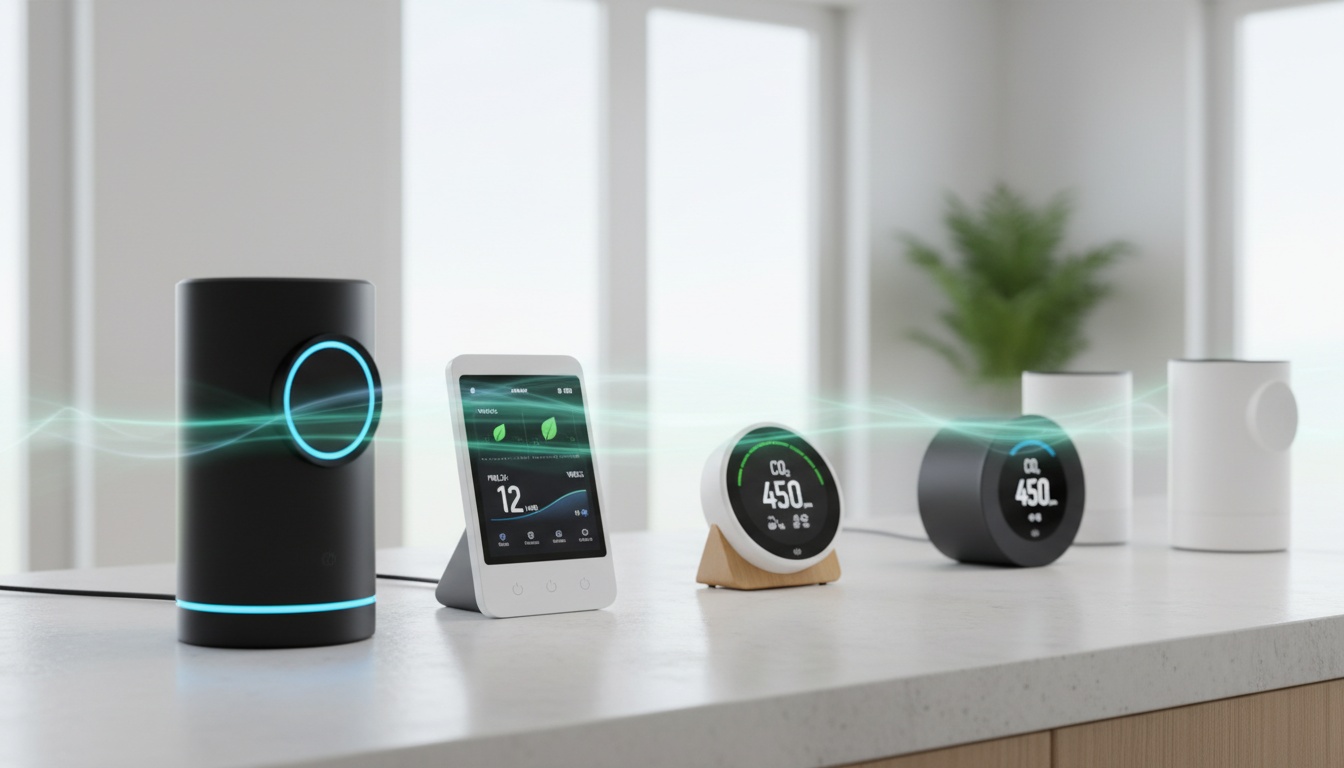
I’ve never forgotten the day a friend visited my apartment and stopped mid-sentence, nose wrinkling. “What’s that smell?” she asked. I shrugged, but the truth is, it had become “normal” to me. Fast-forward a couple of years, and now, every so often, I’ll check the air quality index before going for a run, or even glance at a small device on my desk that tells me if my home air isn’t as fresh as I’d like. Is that just me being a little obsessive—or a trend that says something important about our lives indoors?
Let’s dig into the world of the best air quality monitors, why they matter more than you think, and how to choose one (without losing your mind among endless options and jargon).
Why Air Quality Monitors Are Suddenly Everywhere
If you feel like you’re hearing about “indoor air quality” (IAQ) a lot more lately, you’re not imagining things. The Environmental Protection Agency (EPA) has shown that Americans spend about 90% of their time indoors. That’s huge! And—here’s the kicker—indoor air can be up to 2 to 5 times more polluted than outside air. Think: pet dander, dust, mold spores, fumes from cleaning products, and even the smoke from burning toast (guilty).
Over the last five years, searches for “air quality monitor” have more than doubled according to Google Trends. Wildfires, city smog, and even viral outbreaks (thanks, COVID-19) have made people more aware of what’s floating around their living spaces. And let’s not forget: allergies and asthma aren’t rare. About 1 in 13 Americans has asthma. Sometimes, you don’t even realize what’s making you cough or sneeze.
Breaking Down What Air Quality Monitors Actually Do
So, what are these boxes with blinking lights and phone apps actually measuring? Best air quality monitors are little detectives, sniffing out invisible stuff in your air. Here’s what most good ones keep track of:
- Particulate Matter (PM2.5 & PM10): Tiny particles smaller than a human hair that can get deep into lungs. PM2.5 means “particles ≤2.5 micrometers.”
- Volatile Organic Compounds (VOCs): Harmful gases from paints, cleaning sprays, or even scented candles. VOC sensors detect these.
- Carbon Dioxide (CO2): High levels can make a room feel stuffy or even cause headaches.
- Carbon Monoxide (CO): Deadly but invisible. Not all monitors include this, but it’s a must-have for some homes.
- Humidity & Temperature: Not pollutants, but both affect comfort—and mold risk.
Some smart air monitors even track radon or ozone. But let’s be real: for most people, it’s PM, VOCs, and CO2 that matter day to day.
I once used a portable monitor in my car—just to see. Within 15 minutes in city traffic, the PM2.5 reading jumped from 9 to 67 μg/m3 (micrograms per cubic meter). No wonder I felt tired after the drive.
Are Expensive Monitors Really Better?
Ah, the age-old debate: does higher price mean better results? Short answer: sometimes, but not always. The best air quality monitors can cost anywhere from $70 to $500+. Here’s a breakdown:
- Under $100: Basic, usually track just PM2.5 or CO2. No app, maybe an LCD screen. Good for a single room or starter use.
- $150–$300: Adds smart features—WiFi, mobile alerts, more sensors (VOCs, humidity). Can connect to smart home systems like Alexa.
- $300 and up: Lab-grade accuracy, more sensors (radon, formaldehyde), detailed reporting. Designed for health-conscious folks or allergy/asthma families.
Data from Consumer Reports in 2023 showed that around 60% of people who bought air quality monitors spent between $100 and $250. Most were happy as long as they could track trends over time and spot spikes (like during cooking or dusting).
5 Best Air Quality Monitors: Analysis & Real-World Insights
- Airthings Wave Plus
What’s special: Tracks radon, CO2, VOCs, humidity, temperature, and pressure.
Pros: Super detailed app, especially if you want radon monitoring (radon causes 21,000 lung cancer deaths annually per CDC).
Cons: Slight learning curve. No PM2.5 sensor. - Awair Element
What’s special: Stylish, measures PM2.5, VOCs, CO2, humidity, temp.
Pros: Clear display, detailed data. Good for bedrooms or offices.
Cons: Sensitive to placement (keep away from vents). - IQAir AirVisual Pro
What’s special: Lab-grade accuracy for PM2.5, CO2, temp, humidity.
Pros: Big color screen, real-time charts, can compare indoor vs. outdoor air.
Cons: Bulky and not cheap (usually $250+). - Foobot
What’s special: VOCs, PM2.5, CO2, humidity, temp.
Pros: Easy setup, helpful color-based alerts, good for spotting trends.
Cons: App is a little basic, and no battery—must be plugged in. - Temtop M10
What’s special: Budget-friendly, measures PM2.5, PM10, HCHO (formaldehyde), and TVOCs.
Pros: Affordable for families, portable.
Cons: No app, simple numbers only.
There are other big names (like uHoo and Eve Room) but these five consistently show up in real user reviews and independent testing. I actually tried the IQAir AirVisual Pro myself during wildfire season—a dramatic PM2.5 spike made me close all my windows, fast.
Case Study: Wildfires & the Air Monitor Boom
Let’s use a real event. In 2020, wildfires turned skies orange across California and Oregon. Air quality monitors flew off shelves. One local hardware chain reported a 300% increase in sales. At my cousin’s house in Sacramento, the AirVisual Pro showed indoor PM2.5 levels of 120 μg/m3—a number the EPA calls “unhealthy for anyone.” With windows shut and air purifiers running, it dropped to 20 within hours. Without a monitor, they would’ve kept breathing hazardous air.
Stories like this make it clear: these devices aren’t just for science geeks. They’re basic health tools—especially in areas hit by pollution surges.
Smart Air Monitors: Are They Worth the Hype?
Let’s talk about smart features. Do you need Alexa integration or detailed charts? Or is a simple blinking light good enough? Here’s what I’ve learned:
- Smart home compatibility helps if you want to automate things (like turning on air purifiers when PM2.5 spikes).
- Mobile notifications are handy, especially if you’re worried about kids or pets at home while you’re away.
- Data trends matter most if you want to link symptoms (coughs, headaches) to air changes.
But sometimes, simple is fine. My neighbor uses a cheap monitor—if the numbers jump, she opens a window. No fuss.
How to Use an Air Quality Monitor Like a Pro
You’ve got the gadget. Now what? Here’s a quick step-by-step for getting useful results:
- Pick the right spot: Not near vents or open windows. Living rooms and bedrooms are ideal.
- Check readings at different times: Notice how cooking, cleaning, or opening windows change the numbers.
- Look for patterns: Do PM2.5 or VOCs spike after certain activities?
- Take action: Ventilate, use air purifiers, or fix sources (e.g., stop using that old spray cleaner).
- Calibrate if needed: Some advanced monitors need an occasional reset or calibration for accuracy.
You don’t need to be a scientist. It’s like using a thermometer: numbers help you make smarter choices.
Common Myths About Air Quality Monitors
- Myth 1: “If my air looks fine, it’s clean.”
Fact: Most dangerous pollutants are invisible and have no odor.
- Myth 2: “Air monitors are only for people with asthma.”
Fact: High CO2 or VOC levels can make anyone feel tired or dizzy.
- Myth 3: “Once I buy an air monitor, I don’t need to do anything else.”
Fact: They only detect problems. You still need to fix sources or ventilate.
FAQ: Your Air Quality Questions, Answered
How accurate are consumer air quality monitors?
Honestly? They’re not lab-level, but most are accurate enough for home use. Independent tests show that top models usually track within ±10–20% of scientific instruments for PM2.5 and VOCs. That’s plenty to spot trends and big spikes, which is what matters most.
Where should I place my air quality monitor?
Think “breathing zone”—where you spend most of your time. Middle of the room, away from direct vents or open windows is best. I keep mine on a bookshelf in the living room. If you move it around, you might discover sneaky sources in different rooms.
Do I need a monitor if I already have an air purifier?
Good question! Air purifiers help, but how do you know when to turn them on, or if they’re doing enough? Monitors show you real numbers—so you can see the difference. I find it satisfying to watch PM2.5 drop after 30 minutes with the purifier running.
Can I use one monitor for my whole house?
It depends. If you mostly hang out in one area, one monitor is fine. But if you want to know what’s up in bedrooms or basements, consider a second device—or at least move your main one around.
What’s the most important air pollutant to watch?
For most homes, it’s PM2.5 (tiny particles from smoke, dust, cooking), followed by VOCs and CO2. If you live in a wildfire area or city, this is especially true. Families with kids or older adults should also be alert to high CO2 or, in some areas, radon.
Final Thoughts: Why I Believe Air Quality Monitors Are Worth It
Sometimes, I’ll look at that quiet device on my desk, lights flashing green, and realize I’m breathing easier—not just physically, but mentally. I’m not a hypochondriac (I promise), but knowing that I can do something about invisible risks? That’s empowering.
The best air quality monitors won’t magically clean your air, but they give you the knowledge to protect yourself and your family. In a world where we spend so much time indoors, that feels less like a fad—and more like common sense.