Have you ever tried to picture a computer that could solve problems so complex, even today’s best supercomputers would need thousands of years to catch up? Quantum computing sounds almost magical, but it’s grounded in real science. In this article, I’ll dig into quantum computing future applications from an everyday perspective—no science degree required. If you’ve heard about quantum computers but never quite understood what makes them tick (or why everyone seems so excited), you’re in good company. I’ll sprinkle in stories, research, and a dash of personal wonder as we explore where this technology might take us.
What Makes Quantum Computers So Different (and Weird)?
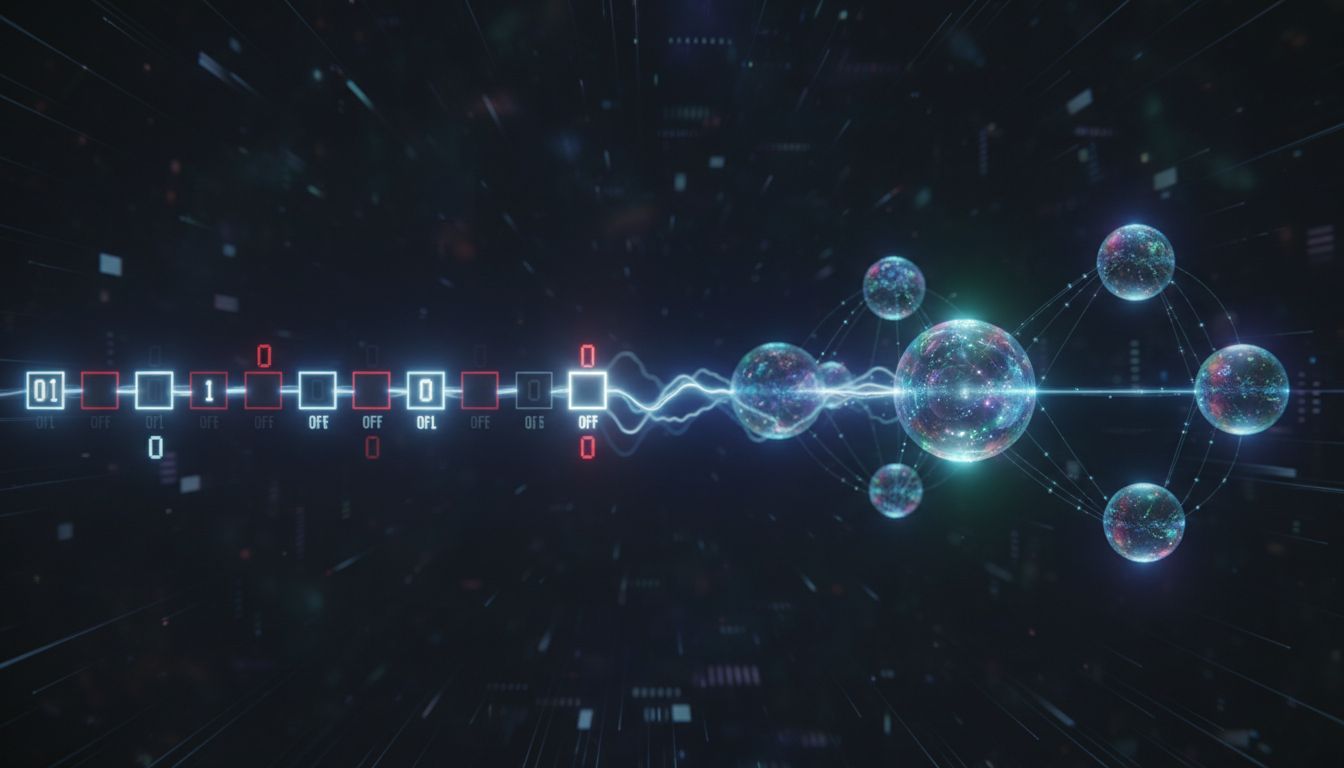
Let’s start with the basics: traditional computers, whether it’s your phone or a NASA supercomputer, use bits—tiny switches that are either on (1) or off (0). Quantum computers, by contrast, use qubits, which can be both 1 and 0 at the same time thanks to a principle called superposition. Imagine flipping a coin and, instead of landing heads or tails, it just… hovers in both states until you check. Wild, right?
But that’s not all. Qubits can also get tangled up with each other through entanglement, so changing one instantly affects the other, even if they’re miles apart! To me, it sometimes feels like something out of science fiction. Yet, it’s all been proven, observed, and built into early-stage machines by scientists across the globe.
Quantum Computing Future Applications: Beyond Hype
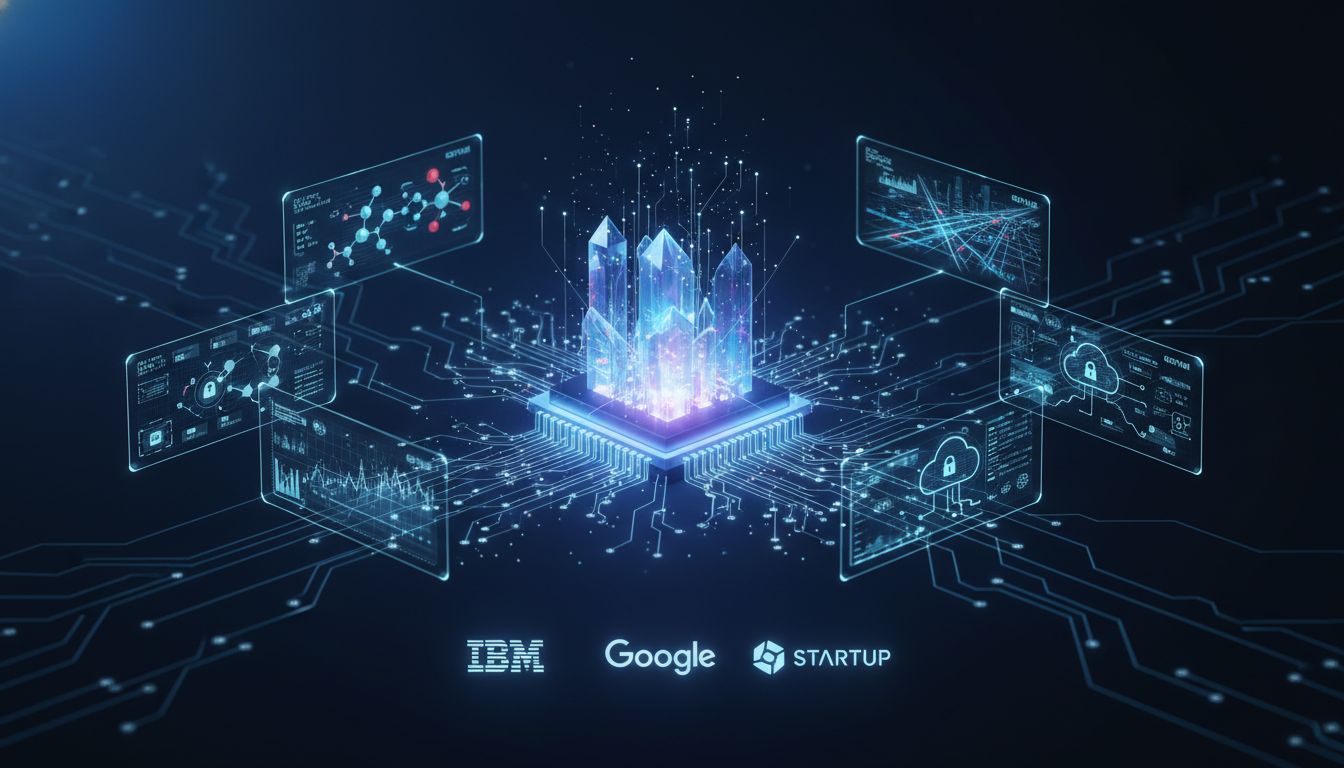
Let’s get real: for years, quantum computing was mostly a playground for physicists and theorists. But in the last decade, things have sprinted forward. Today, companies like IBM, Google, and startups like Rigetti have built quantum computers with over 100 qubits, and the race to “quantum advantage” (where quantum beats classical computers) is in full swing. But what does this actually mean for us? What future applications of quantum computing might touch our daily lives?
1. Revolutionizing Drug Discovery and Chemistry
Right now, developing new medicines is painfully slow and expensive. It can take 10–15 years and billions of dollars to bring a single drug to market. Why? Because simulating molecules and their interactions—especially the big, twisty ones in our bodies—is really hard for classical computers. Quantum computers could change everything here.
For example, simulating caffeine’s molecular structure on a regular computer would require more bits than there are atoms in the universe—no joke. Quantum computers could model molecules directly, dramatically speeding up research for things like cancer drugs, vaccines, and materials for cleaner batteries. Some experts predict that quantum-accelerated drug discovery could cut new medicine timelines by up to 50% and open doors to treatments we haven’t even imagined yet.
2. Breaking (and Making) Cryptography
Here’s a mind-bender: most of our online security—bank logins, messaging apps, national secrets—is guarded by encryption that could, in theory, be cracked by powerful quantum algorithms. The famous Shor’s algorithm is designed to do just that: break the codes protecting modern data by factoring huge numbers way faster than any classical machine.
This isn’t just bad news, though. Out of necessity, researchers are already working on post-quantum cryptography, completely new ways to keep information safe even in a quantum future. The US National Institute of Standards and Technology (NIST) expects to standardize quantum-resistant algorithms by 2024–2025. So, while quantum computers could threaten current encryption, they’re also driving innovation towards even stronger security.
When Might Quantum Computers Actually Matter?
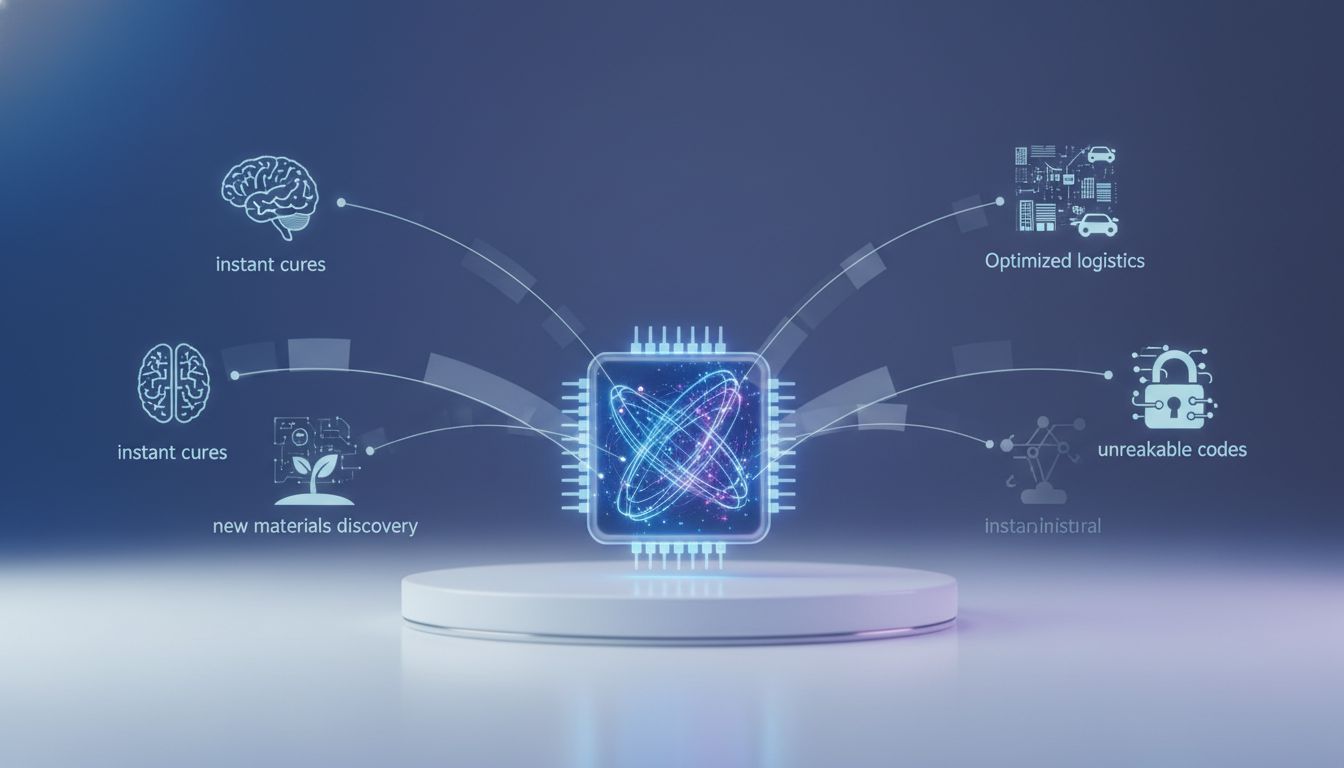
It’s easy to get swept up in the dream of instant cures and unbreakable codes. But let’s pump the brakes for a second. Practical quantum computers are still in their infancy. The largest machines today are noisy and can only run for a few seconds before errors creep in (this is called “quantum decoherence”—a fun word to toss around at parties).
Yet, the pace is wild: IBM’s roadmap aims for a 1,000-qubit computer by 2024 and even bigger leaps by 2030. Some analysts estimate that by 2035, we’ll see “fault-tolerant” quantum computers—meaning they can actually do useful, reliable work. The first widespread quantum impact might show up in industries with huge, complex problems to solve—not consumer tech (yet).
Mini-Case Study: Volkswagen and Traffic Optimization
Here’s a fun story: back in 2019, Volkswagen used a quantum algorithm to optimize bus routes during the World Congress on Intelligent Transport Systems in Lisbon. The goal? Avoid city traffic jams by finding the most efficient path for each bus—a task too complex for most computers. The test was small, but it worked. If quantum computing can untangle city traffic, imagine what it could do for global shipping, airline schedules, or your morning commute!
Quantum Computing Future Applications in Major Industries
- Finance: Quantum computers could turbocharge portfolio optimization, risk analysis, and fraud detection by crunching massive datasets in real time. JPMorgan, Goldman Sachs, and Barclays are already funding early research.
- Logistics: Shipping giants like DHL and Maersk are eyeing quantum algorithms to slash delivery times and costs, especially for global supply chains with millions of moving pieces.
- Climate Science: Quantum models could simulate weather and climate patterns with unprecedented detail, helping scientists predict storms or design new eco-friendly materials.
- Artificial Intelligence: Training AI systems currently gobbles up huge energy and time. Quantum computing could speed up “machine learning” tasks—though experts debate how big the impact will be.
Each of these sectors faces problems so complex that even the world’s fastest supercomputers struggle. Quantum computers aren’t faster at everything, but for very specific challenges, they could offer exponential gains.
Imperfect, Unpredictable, and Full of Promise
Every time I read about quantum breakthroughs, I’m reminded that progress isn’t smooth or predictable. Early quantum computers are notoriously “noisy,” and getting them to work reliably is a bigger headache than most people realize. IBM’s 2023 quantum roadmap had to be revised because real-world engineering wasn’t keeping pace with theory. It’s not all doom and gloom, though. These hiccups are normal for a technology in its early years.
Crucial Challenges: The Tough Stuff
- Error Correction: Even a single stray electron or vibration can crash a quantum calculation. Robust error correction is still “under construction.”
- Scalability: Turning a handful of qubits into thousands or millions is a massive leap. Each step up adds new engineering hurdles.
- Cost and Accessibility: Quantum machines are expensive—think millions of dollars per unit, plus specialized environments (many run near absolute zero).
Still, some government labs, universities, and corporate partners have set up cloud access to quantum machines for researchers. Someday, maybe even high schoolers (or curious 8th graders!) will be able to run quantum experiments online.
Quantum Myths: Let’s Break Things Down
Let’s pause and clear up a few myths that pop up whenever quantum computing comes up at family dinners or news headlines:
- Myth 1: Quantum computers will replace laptops. Nope! They’re good at super-complex math, not Netflix and emails.
- Myth 2: Quantum can crack all codes instantly. In theory, it’s a risk—but in practice, we’re years (maybe decades) from breaking today’s toughest encryption.
- Myth 3: You need to understand quantum physics to use it. Not true. As the technology matures, user-friendly tools and apps will hide the quantum weirdness behind the scenes, just like most folks don’t need to know how microchips work to use a smartphone.
Human Stories: What Could Change for All of Us?
Here’s the crux: most future applications of quantum computing begin with scientists and industries facing impossible puzzles. But history shows that once a powerful technology escapes the lab, ripple effects reach everyone.
Think about the history of electricity: invented for arcane experiments, later revolutionized homes, factories, and hospitals. Or the early days of the internet—who imagined social media, or streaming movies from your pocket?
Someday, quantum computing might help doctors design personalized cancer treatments, or farmers predict and adapt to droughts weeks in advance. We may see new materials that make solar power cheaper, or batteries that last ten times longer. It’s not all science fiction—these are targets industry heavyweights are actively chasing.
Pros and Cons: Is Quantum Computing a Magical Fix?
| Pros | Cons |
|---|---|
|
|
Quantum Computing Future Applications: An Evolving Roadmap
So, what’s the honest takeaway? Quantum computing’s future applications aren’t about science fiction—they’re about supercharging the hardest problems humanity faces, one breakthrough at a time. If progress continues (and most signs say it will), we’ll probably hear about quantum’s first “killer app” within the next decade, most likely in areas like chemistry, logistics, or cybersecurity.
And if you’re the type who likes to keep your finger on the pulse of new tech, watch for hybrid solutions. Many experts believe that the real magic will come from “quantum-classical” systems, where classical computing does most of the work, with quantum machines tackling the toughest pieces.
Quick Data & Trends: How Fast Is This Moving?
- Quantum computing market projected to hit $65 billion by 2030 (source: Statista)
- Google’s 2019 “quantum supremacy” experiment solved a problem in 200 seconds that would take a classical supercomputer 10,000 years
- Over 50 major universities now offer quantum computing courses and labs
- Mainstream cryptography standards expected to change by 2025 in anticipation of quantum threats
Frequently Asked Questions about Quantum Computing Future Applications
How soon will quantum computers be widely available?
That’s the golden question! Most experts say it’ll be at least another 10 to 15 years before quantum computers become a vital part of everyday business. Right now, access is limited to research institutions and a few large companies, but as costs drop and technology matures, more people—maybe even high school science classes—might get hands-on.
Will quantum computers make all our current technology obsolete?
Not at all. Quantum computers aren’t meant to replace laptops or smartphones. They’re designed to handle problems that are too tough for classical computers, like simulating molecules or optimizing massive systems. You’ll still use your regular devices for everyday tasks.
Is quantum computing a security risk?
It’s a bit of a double-edged sword. Quantum computers could eventually crack today’s most popular encryption, which is why researchers are racing to develop new, “quantum-safe” cryptography. With smart planning, the transition should keep most data secure—even as quantum power grows.
Can quantum computing help fight climate change?
Absolutely. By simulating complex molecules and weather patterns, quantum computing could accelerate the development of cleaner energy sources and smarter climate models. Imagine designing better solar panels or batteries much faster than we can today. While it’s not a magic bullet, it’s a potentially powerful tool in the fight for a greener planet.
Do you need to be a quantum physicist to work in this field?
Nope! While understanding the basics helps, quantum computing is attracting mathematicians, computer scientists, engineers, and problem-solvers of all backgrounds. As the technology grows, more user-friendly languages and tools are making it easier for non-experts to dive in.
One Human’s Reflection: Why Quantum Computing Inspires (and Humbles) Me
Every time I try to wrap my mind around quantum computing, I end up feeling a mix of awe and humility. Imagine being alive at a time when something so strange and promising is just coming out of the lab—kind of like the earliest days of electricity or the internet. To me, the true magic of quantum computing future applications is how it forces us to expand what we think is possible. Sometimes, that means wrestling with uncertainty and wild complexity. But isn’t that what progress is all about?
So, next time you hear someone mention “qubits” or quantum breakthroughs, maybe you’ll remember: it’s not just about faster computers. It’s about unlocking new doors in science, health, and even daily life—one quantum leap at a time.