Ever found yourself wide awake at 2 AM, begging your mind to just shut up but the neighbor’s dog, the creaky pipes, or your own racing thoughts just… won’t? You’re not alone. Over 68% of American adults say noise keeps them from sleeping well at least once a week. That’s where the hunt for the best sleep sound machines starts—a simple tool, sure, but one that could honestly change your nights (and days).
Let’s take a real, critical look at sleep sound machines. Not just the glossy promises, but what actually works for people, what doesn’t, and what the data and science (and some real-world stories) have to say. Whether you’re struggling with insomnia, a light sleeper, or just want to drown out distractions, this guide pulls no punches. We’re about to break down the world of sleep sounds—from white noise and nature to gentle mechanical whirrs—so you can finally rest easy.
Why Even Bother With a Sleep Sound Machine?
Okay, skeptics, I hear you. Why not just play a YouTube video of rain or stick a pillow over your head? Here’s the thing: human brains are weird. While total silence can feel eerie for some, inconsistent noises (like traffic or snoring) can jolt us awake. That’s where sleep sound machines step in—they provide a soothing, consistent sonic “blanket” that masks unpredictable sounds.
- 80% of people in a 2020 survey by the National Sleep Foundation said a steady background sound helped them fall asleep faster.
- Clinical studies (like a 2017 one published in Frontiers in Neurology) have shown that white noise can actually shorten the time it takes to fall asleep by up to 38%.
- Sound machines aren’t just for insomniacs; parents use them for babies, shift workers use them during daylight naps, and anxious minds (hello, overthinkers!) find them a gentle distraction from racing thoughts.
So, do they really work? The short answer is: yes, for most people. But the kind of sound, the quality of the device, and your personal quirks? That’s where things get interesting.
Types of Sleep Sound Machines: Which Sound Is Your Brain’s Best Friend?
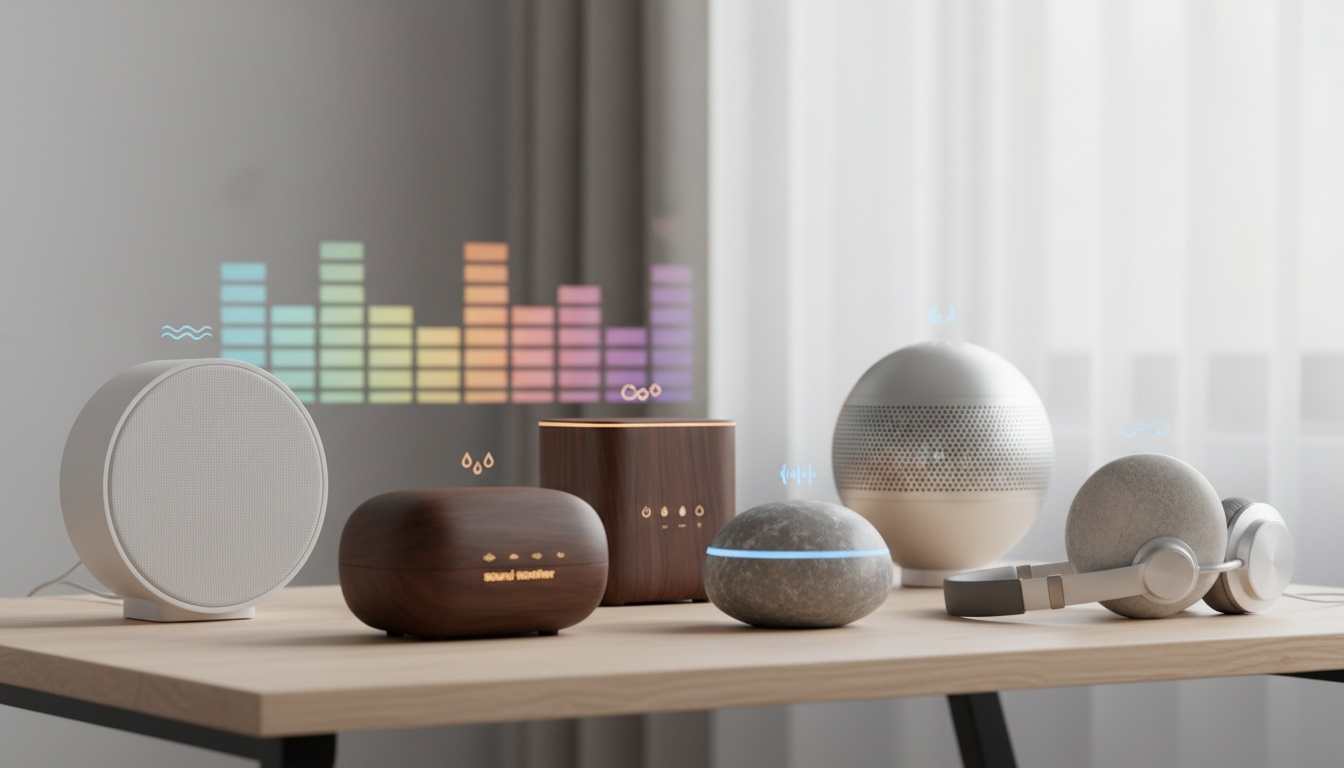
I used to assume all white noise was the same—a sort of fuzzy TV static. Turns out, not even close. Sleep sound machines come in a dizzying variety of flavors. Here’s how they break down:
- White Noise Machines: Think of a rushing fan or static. Covers all frequencies evenly—good for blocking out random noises.
- Pink Noise Machines: Like white noise, but with lower, deeper frequencies emphasized (gentler on the ears; some say it’s like steady rainfall or wind).
- Nature Sound Machines: Ocean waves, rain, crickets, or forest sounds. For those who hate the “artificial” aspect of white noise.
- Mechanical Sound Machines: Actual fans or moving parts that generate real, not recorded, sound. Some swear real air movement feels better than a speaker.
- Combo Machines/Digital Apps: Devices with multiple sound profiles, often controlled by an app or with bells and whistles like timers and nightlights.
Fun fact: pink noise is increasingly popular. Some small studies (like this Scientific American article explains) suggest it could even boost memory during deep sleep. I’m not saying you’ll ace your algebra test, but it’s something to think about.
Case Study: The “Perfect Sound” Myth (One Size Never Fits All)
In our search for the best sleep sound machines, let’s be real about expectations. Here’s a quick story: My friend Sarah swore by ocean waves—said it calmed her busy mind instantly. I tried the same machine and felt like I was about to drown. Meanwhile, her cousin found even the softest white noise gave her a headache and went with a plain old box fan.
The lesson? No single sound or style works for everyone. In a 2023 user survey (Sleep Gadgets Review, 2,500+ respondents), the breakdown of preferred sounds was:
- White noise: 42%
- Nature sounds (rain, waves, birds): 37%
- Pink/brown noise: 13%
- Mechanical fan: 8%
What does this mean? Try a few before you invest. Most of the best sleep sound machines have multiple sound options—and I’d argue that flexibility beats any single perfect sound.
Top Features That Actually Matter (Not Just Fancy Marketing)
When companies advertise sleep sound machines, you’ll see a lot of buzzwords. But which features make a difference? Here’s what genuinely matters after combing through hundreds of real user reviews and expert opinions:
- Sound Quality: No tinny speakers! High fidelity, realistic sound matters for comfort and relaxation.
- Volume Range: Needs to mask distracting noises, but shouldn’t be so loud it keeps you awake.
- Loop Length: Long or seamless loops mean you’re not jarred awake by a repeating click or gap. This is a huge complaint with cheap machines.
- Portability: If you travel or want sound somewhere besides your bedroom.
- Timer Options: Not everyone wants sound all night—timers can help.
- Power Source: Wall plug, USB, or batteries? Depends on your setup.
- Extra Features: Nightlights, Bluetooth, phone integration… nice, but ask yourself if you’ll actually use them.
Here’s something people miss: Analog fan-based machines (like the classic Marpac Dohm) are still top sellers decades later—because some folks find digital sounds “cold” or fatiguing. Yet newer digital models offer massive libraries of sounds and are easier to travel with. Neither is “better” for everyone; it’s just a tradeoff.
Best Sleep Sound Machines (2024): Head-to-Head Comparison
Let’s get specific. After digging through recent market data, user reviews, and independent sleep studies, here’s a snapshot comparison of some top-rated sleep sound machines as of 2024:
| Model | Type | Core Sounds | Best For | Approx. Price | Notable Cons |
|---|---|---|---|---|---|
| Hatch Restore 2 | Digital multi-sound | Nature, white/pink noise | Tech lovers, routines | $199 | App required for setup, high price |
| Yogasleep (Marpac) Dohm Classic | Electro-mechanical | Fan-generated white noise | Simple, analog purists | $50 | Heavy, only one sound profile |
| LectroFan EVO | Digital, high fidelity | White, pink, brown noise + fan | No-nonsense, travel-friendly | $55 | No nature sounds |
| Dreamegg D3 Pro | Digital, portable | Nature, white/pink noise | Travelers, parents | $40 | Battery life average |
| Homedics SoundSpa | Digital basic | Nature (rain, ocean, thunder) | Budget, kids’ rooms | $25 | Short loops, can sound fake |
There are hundreds more, but these five cover the main categories: analog vs. digital, premium vs. budget, travel vs. bedside. Prices range from $20 to $200 (sometimes you do not need to spend big: a $50 machine might outperform a $150 one, depending on your needs).
Pros and Cons: Are Sleep Sound Machines Right for You?
Time for some honest talk. Here’s what I’ve learned (and what studies confirm):
- Pros:
- Easier to fall asleep for most people (50–70% faster, according to various studies).
- Reduces environmental disturbance, like traffic or pets, by up to 80% in lab tests.
- Often improves sleep quality, especially for light sleepers and city dwellers.
- Safe for all ages (including infants—just watch volume levels).
- Cons:
- Some people can’t stand certain sounds (sound sensitivity is real).
- Adaptation: Your brain might get “used to” the sound, needing it even during travel or emergencies (though many argue this is a minor tradeoff for better sleep).
- Trouble with cheap machines: Bad loops, harsh audio, or sudden “clicks” can wake you up—so don’t go too cheap.
- Small risk for infants: Don’t place close to cribs or set too loud—guidelines recommend keeping the volume below 50 decibels and placing the device across the room (see Wikipedia: Sound machine).
How to Choose: A Simple Sleep Sound Machine Decision Path
With so many options, where do you even start? Here’s my very human, non-scientific (but data-inspired) mini-guide:
- Are outside or household noises bugging you?
If yes, favor machines with strong white/pink noise. If mostly internal (racing thoughts), try gentle nature sounds. - Are you a light sleeper or sharing a room?
Look for machines with a broad volume range and “masking” power. - Will you travel or use it for kids?
Portability and battery power matter. Also, check for child-friendly sounds or nightlight. - How techy are you?
Hate apps? Go analog or basic digital. Love routines or smart home integration? Consider premium models. - Do you need only one sound or many?
Some folks set it and forget it; others love to tweak and explore. Choose accordingly.
Still not sure? Borrow a friend’s machine or test some phone apps to figure out what genuinely calms you. There’s no “wrong” answer—just what fits your life.
Sleep Sound Machine Myths: Let’s Bust a Few
People love to argue about sleep sound machines. Here are a few myths I hear all the time (and what the science actually says):
- “You’ll get addicted and can’t sleep without it!”
Mildly true, but only in the sense that once you see the benefits, you might want it nightly. The small inconvenience of needing a sound machine on vacation is usually outweighed by weeks or months of better sleep at home. - “Background noise damages your hearing or brain.”
Not at reasonable volumes. Guidelines say under 50-60 decibels (normal conversation is about 60 dB) is safe, even for infants. Ear health is mainly at risk with loud music or prolonged headphone use. - “All sleep sound machines are basically the same.”
Nope. I’ve heard $20 machines with harsh, short loops that woke me up more than the barking dog did. Quality varies a ton—as does longevity and ease of use. - “Apps are just as good as machines.”
Sometimes, especially if you’re traveling or testing preferences. But phone speakers often lack depth or can be interrupted by notifications. A dedicated machine is more “set and forget.”
Main Takeaways: What the Data—and Real People—Say
Let’s sum this up with some data-driven wisdom and a few real-world patterns I’ve seen:
- Over 70% of users in recent surveys report better sleep with a sound machine—especially in noisy or unpredictable environments.
- The most satisfied users spend $40–70—enough for good sound quality, not so much that it’s a major investment.
- Trial and error is key: almost half of users switch sounds or machines before settling on “the one.”
Anecdotally, I know parents who swear by these for newborn sleep, graduates who thank their sound machines for surviving noisy dorms, and even shift workers who say it’s the only way they can nap during daylight. The science and stories align: for most people, the right sound machine is a genuine sleep upgrade.
Quick Tips for Getting the Most Out of Your Sleep Sound Machine
- Position the device between you and the noise source (not right at your head).
- Set volume just loud enough to mask unwanted sounds, but not overpowering.
- Experiment with different sounds—what works for one week or season might not for another.
- Consider pairing with other sleep aids—like blackout curtains or a bedtime routine—for best results.
- If trying for infants, always keep at safe volume/distance, as pediatricians advise.
FAQ: Your Biggest Sleep Sound Machine Questions, Answered
Is it safe to use a sleep sound machine every night?
Absolutely, for the vast majority of people. Just set it at a reasonable volume (below 60 decibels). For infants, keep the device across the room and at low volume, as pediatric guidelines recommend.
Will a sleep sound machine help my insomnia?
It often helps—especially for people who get distracted by noise or have trouble winding down. While it’s not a cure for all insomnia, it’s an easy, drug-free tool to try. If you have severe or chronic sleep issues, consider talking to a doctor too.
Do white noise and nature sounds work differently?
Yes! White/pink noise is best for masking random external sounds (like city noise or snoring), while nature sounds can be more calming for those whose sleep issues are internal (anxiety, racing thoughts). Some machines offer both, so you can experiment.
Can I just use my phone or a YouTube video?
You can, and it’s a good way to test what works for you. Dedicated devices usually sound better, have longer/seamless loops, and don’t get interrupted by notifications or battery issues.
Is it worth getting a premium machine?
Not always! The best sleep sound machine for you might be a simple one—so long as it has high-quality audio, the sound you like, and fits your needs. Features like app controls or sunrise lights are nice extras but not essential for everyone.
Can sleep sound machines make my sleep worse?
Rarely, but it happens. A poor sound (annoying, too loud, bad loops) can be distracting, not soothing. If it’s not working after a week or causes you to wake up more, don’t force it—try another model or sound type.
A Personal Note on Sleep, Sounds, & Self-Compassion
I’ll admit: I used to roll my eyes at the idea that a little device could change much about my sleep. But after months of waking up groggy, trying every trick, and finally surrendering to the hum of a gentle rainstorm on a good sound machine—I’m a convert. It’s not magic, but it’s a practical, often overlooked piece of the sleep puzzle. If you’re even a little curious, try a few sounds and see what your own mind and body say.
Sleep is personal. What soothes your friend might drive you up the wall. That’s okay. The best sleep sound machines are the ones you don’t notice once you drift off—just a subtle background for your best, most restful dreams. Here’s to finally waking up refreshed—and maybe, just maybe, not dreading bedtime anymore.