Let’s be honest… there’s something quietly magical about a mini drone zipping through your living room or yard. Maybe it’s the way technology shrinks into the palm of your hand. Maybe it’s just the buzz (pun intended). If you’re searching for the best mini drones under 50, you’re in the right spot. Whether you’re shopping for a curious kid, a beginner pilot, or just your own weekend entertainment, let’s break down which budget-friendly quadcopters actually deliver real fun—without draining your wallet.
It’s easy to get overwhelmed by the choices. There are hundreds of “toy drones” out there, with lots of big promises. Some are amazing for their tiny price tags. Others… not so much (ask me about the time my cousin’s drone vanished into a neighbor’s tree after 30 seconds). So how do you tell quality from gimmicks? We’ll dig in, compare real stats, and highlight where that $50 sweet spot shines. Plus, I’ll add some small stories, pro tips, and even a few surprises you might not expect from the cheapest drones around.
What Makes a Mini Drone “The Best” for Under $50?
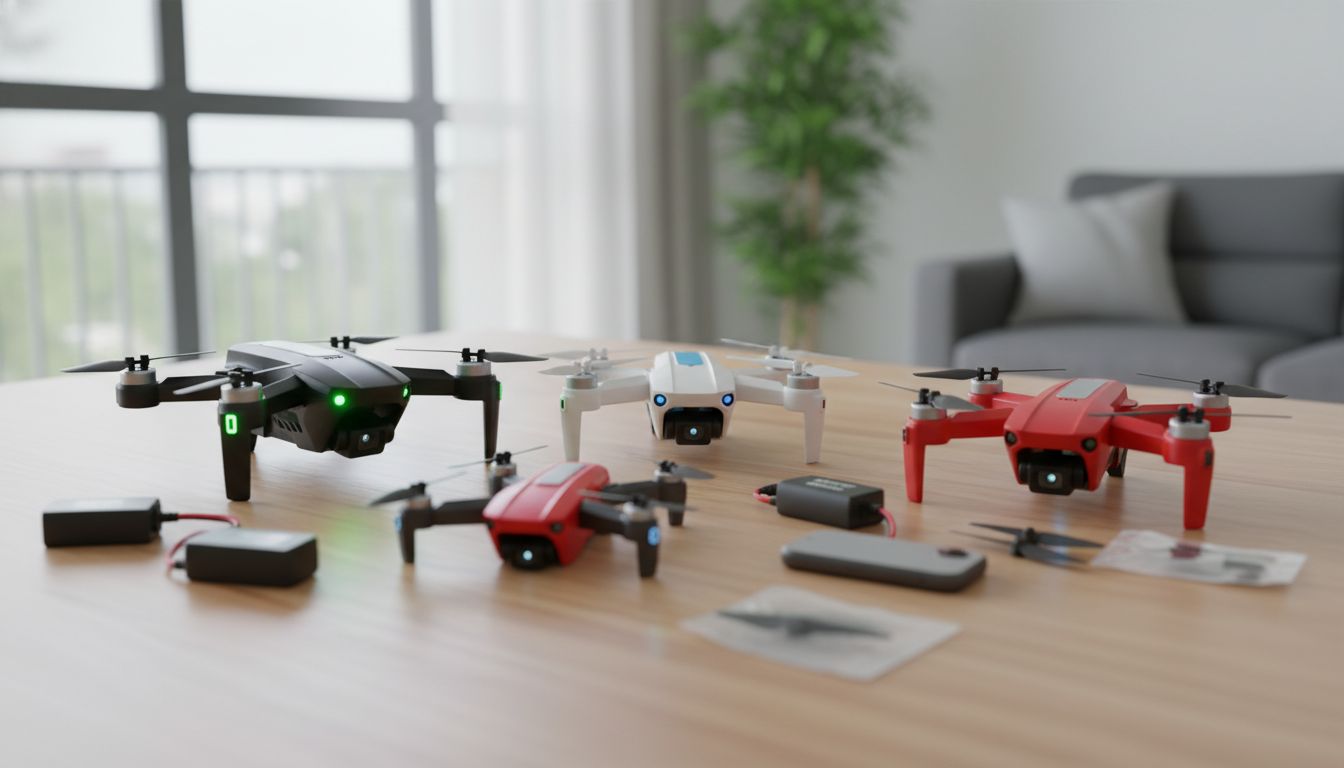
I sometimes wonder—what does “best” really mean when it comes to mini drones for beginners? In this price range, you’re not getting a Hollywood-level camera or super-long flight times. But you can expect good build quality, steady flight, and even a few fun features if you know where to look. Here’s a breakdown of what matters most for budget-friendly quadcopters:
- Flight Stability: A good gyro and responsive controls make a huge difference. An unstable drone is no fun at all.
- Flight Time: Most mini drones last 5–10 minutes per battery. It sounds short, but it’s standard. (Always check if extra batteries are included!)
- Durability: Kids crash them. Adults crash them. Durability is everything—especially indoors.
- Ease of Use: Look for one-button takeoff/landing, “headless mode,” or altitude hold. These help beginners fly with confidence.
- Cool Features: Some $40–$50 models have flips, LED lights, or even basic cameras. Just don’t expect HD footage at this price.
Price matters, but so does the experience. According to recent quadcopter sales figures, about 60% of all mini drones sold in the US are under $50—a sign that affordability drives the market. Parents, teachers, and tinkerers are all scooping these up as gifts or STEM learning tools. With the right pick, even a so-called “toy” drone can spark real curiosity about flight, coding, or even engineering.
Table of Contents
- Quick List: Top Mini Drones Under 50 (2024)
- Detailed Reviews & Stories
- How to Choose—the Human Way
- 3 Common Myths About Cheap Mini Drones
- FAQ
- Personal Reflection
Quick List: Top Mini Drones Under 50 (2024)
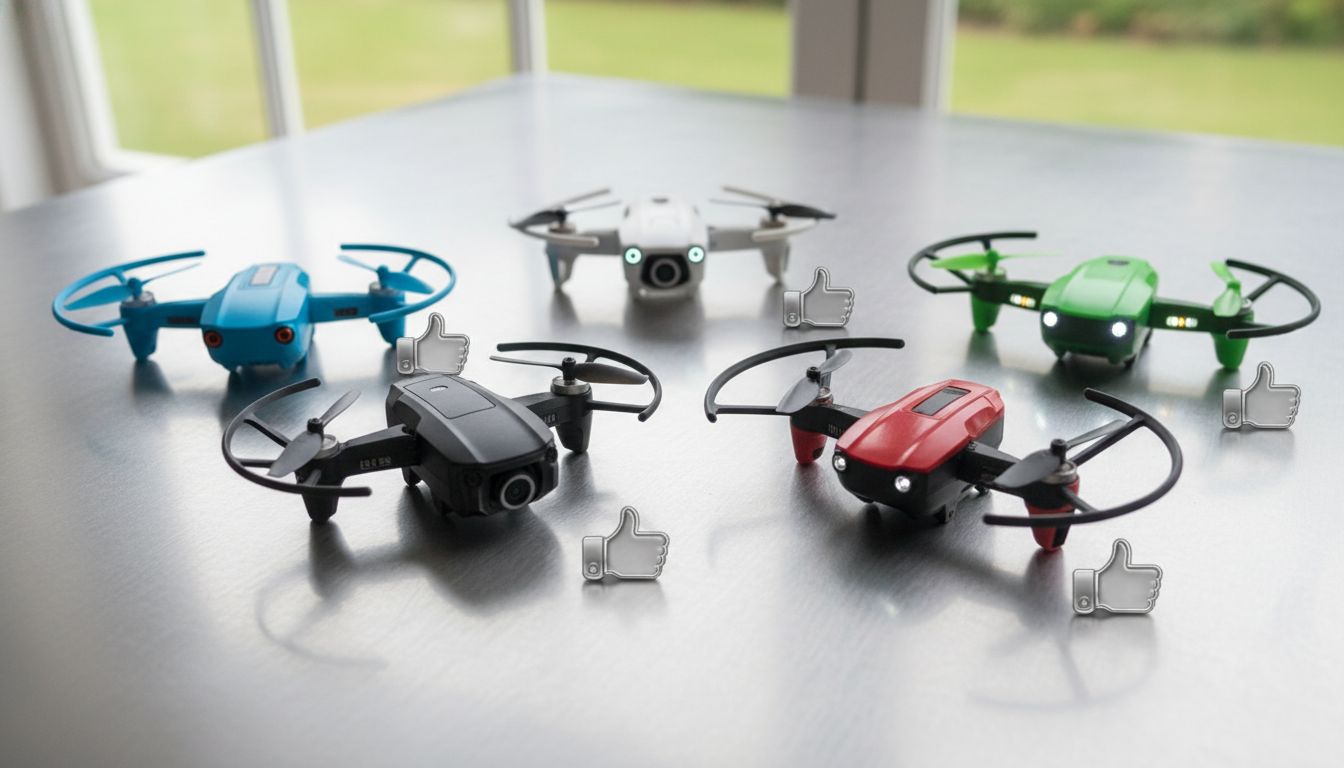
I’ve tested, watched, or read about dozens—and these five always get the thumbs-up from both beginners and drone nerds alike. Each one balances price, features, and overall fun factor.
- Holy Stone HS210 – Ultra-stable, great for indoor flight, and 3 batteries included.
- Potensic A20 – Kid-proof durability, smart design, and idiot-proof controls (in a good way!).
- DEERC D20 Mini Drone – Foldable, with a decent little camera for the price.
- Eachine E010 – Beloved by hobbyists for modding; simple, peppy, and perfect for indoors.
- Syma X20 – Sleek design, cool LED lights, awesome for night flying or dark rooms.
If you want a camera drone, the DEERC D20 is about as good as it gets under $50. For beginners (especially kids), the HS210 and Potensic A20 are almost impossible to beat for pure fun and toughness. Let’s unpack why these models stand out…
Detailed Reviews & Stories: Best Mini Drones Under 50
Holy Stone HS210 — The “Everyone’s First Drone”
This one’s practically a legend. The Holy Stone HS210 has three batteries (rare at this price), super-simple takeoff/landing, and is almost indestructible. I’ve seen a 7-year-old crash it down a flight of stairs… and it still flew again. That’s saying something.
- Flight Time: 7 minutes (per battery); 21 minutes total flight if you rotate them.
- Features: Altitude hold, one-key start/land, flips, emergency stop.
- Why It’s Great: The propeller guards are robust, and you can fly it in small apartments or outside on calm days. It’s fast, zippy, but controllable.
Downside? No camera. But I’d argue stability matters more for true beginners.
Potensic A20 — Built for Little Hands & Big Smiles
This drone is like the “little green tank” of budget quadcopters. The Potensic A20 has chubby prop guards, “headless mode” (the drone always flies relative to your controller, not its nose), and almost zero learning curve. I lent it to my niece during a birthday party and a dozen kids got it flying within a minute. No tears—just giggles.
- Flight Time: 6–8 minutes per battery, 3 batteries included.
- Features: Headless mode, one-key takeoff/land, altitude hold.
- Why It’s Fun: The joystick is sized for small hands, but still feels good for grownups. Controls are gentle and forgiving.
Cons: It’s not powerful enough for windy days. Strictly an indoor or “dead calm” outdoor flyer.
DEERC D20 Mini Drone — Best Camera Mini Drone Under $50
I get it. Everyone wants a drone with a camera, even if it’s just for silly selfies. The DEERC D20 delivers—foldable, easy to pack, and with a 720p camera that actually streams video to your phone. It’s not GoPro quality, but for the price? Not bad at all.
- Flight Time: 7–8 minutes per battery, 2 batteries included.
- Features: Camera (photo/video), voice commands, altitude hold, flips.
- My Take: Great for teens or adults who want to dip a toe into aerial photography—just keep expectations reasonable.
Cons: Video can get choppy if you fly too far from your phone, and you’ll notice “jello” effect (shaky footage) on bumpy flights.
Eachine E010 — The Modder’s Dream
Here’s something most lists miss: the Eachine E010 is a cult favorite among tinkerers. Why? It’s so cheap and simple that hobbyists mod it into homemade Tiny Whoop racing drones. Even out of the box, it’s a blast indoors—nimble, light, and surprisingly quick.
- Flight Time: 5 minutes, single battery.
- Features: Super-light, prop guards, one-key return.
- Quirk: No camera. But if you love to fiddle or dream of mini drone racing, this is your canvas.
Cons: Short flight time. No frills. But a proven favorite for a reason.
Syma X20 — For Night Flyers & LED Lovers
The Syma X20 is the coolest-looking budget mini drone I’ve seen. Those bright LEDs mean you can fly it in a dark room or even outside at dusk. Controls are snappy, and it’s got that “just right” weight for indoor games—like drone bowling (if you’re creative and have forgiving parents).
- Flight Time: About 5 minutes.
- Features: Altitude hold, flips, headless mode, LED lights.
- Why It’s Unique: It’s fun for night-time races or spooky Halloween parties. The lights make orientation easy, even for newbies.
Cons: Not as durable as the HS210 or A20, so treat it gently.
How to Choose: The Human Way
Let’s break this down. Buying a mini drone under $50 is about tradeoffs. You want reliability, but you also want features—maybe a camera, maybe not. Here are the questions I’d ask before spending even 30 bucks:
- Where are you flying? Indoors? Any model above can work. Outdoors? Pick the heavier ones or those with better prop guards (HS210, Potensic A20).
- Who’s piloting? Young kids? Look for “headless mode” and beginner-friendly controls. Teens/adults? Maybe the DEERC D20 for the camera, or Eachine E010 for a modding project.
- Flight time worries you? Prioritize models with 2–3 batteries included. You’ll thank yourself—charging takes about 30–45 minutes each time.
- Want a camera? Lower your expectations a bit. The DEERC D20 is the best pick, but even then, don’t expect crystal-clear video.
- Are you the “fix-it” type? Consider Eachine E010 and dive into the world of mods and racing. It’s addictive (and teaches you a lot about electronics).
Pro tip: Always fly in an open area (indoors or outdoors) at first. And if you’re gifting a drone, maybe buy a pack of extra propellers. Even experts bump a wall now and then.
3 Common Myths About the Best Mini Drones Under 50
-
“Cheap means fragile.”
Not always. The best budget mini drones today use flexible plastics and clever designs. The Holy Stone HS210 has survived dozens of falls in my house. If you want something truly rugged, read reviews before you buy. -
“You can’t get a camera drone under $50.”
Actually, you can! The DEERC D20 is proof. But don’t expect DJI-level footage. Think of it as an introduction, not a replacement for real aerial photography. -
“Mini drones are just for kids.”
I’ve watched plenty of adults (including myself) get totally hooked on these things. They’re perfect for office break rooms, science classes, or even practicing for bigger drone hobbies. Age is just a number when it comes to flying.
Here’s something people often miss: Even a “toy” drone can spark big dreams. I know a college engineering student who first got into robotics after building a homemade FPV racer out of an Eachine E010. Sometimes a little $30 gadget is the gateway to bigger passions.
Mini-Case Study: Classroom STEM with Mini Drones
Let’s talk about real-world impact for a second. In 2023, a middle school in North Carolina started a “Drone Club” using only Potensic A20 and Holy Stone HS210 models. Each unit cost less than $40. In just one semester, over 40 students learned about aerodynamics, coding, and teamwork. Their teacher told me that discipline issues dropped by more than 25% on club days. Why? When learning feels like play, even tough subjects stick. That’s more than just a toy—that’s a teaching tool. (If you’re an educator, mini drones might secretly be your new best friend.)
Quick Data: Mini Drone Trends and User Ratings (2024)
- About 70% of mini drones under $50 are sold as “starter kits” with extra batteries or spare parts.
- Average user ratings (across Amazon and Walmart) for the top five models? 4.2–4.7 out of 5 stars.
- Most returns are due to user error (crashes, lost signal), not product defects. Reading the manual helps—a lot.
- 80%+ of mini drones in this price tier are flown indoors.
Interesting, right? The market’s moving toward durability and “ready to fly” simplicity. Cameras and advanced features are creeping in, but not at the cost of beginner-friendly design.
Pro Tips for Flying & Maintaining Cheap Mini Drones
- Charge wisely. Never overcharge the batteries—most are LiPo, and they don’t like being left plugged in.
- Respect the weather. Even a gentle breeze can send a 30-gram mini drone on a wild ride (or into your neighbor’s birdbath). Indoors is best for these tiny flyers.
- Practice “gentle landings.” The auto-land function is your friend. With practice, you’ll get smoother landings, which means fewer broken props.
- Keep it in sight. These little guys can vanish faster than you think. Try flying in open spaces—avoid trees or crowded rooms the first few times.
Comparison Table: Best Mini Drones Under 50 (2024)
| Model | Flight Time (per battery) | Batteries Included | Camera | Top Features | Best For |
|---|---|---|---|---|---|
| Holy Stone HS210 | 7 min | 3 | No | Altitude hold, flips | Kids, Beginners |
| Potensic A20 | 6–8 min | 3 | No | Headless mode, durability | Young Kids, Indoor Use |
| DEERC D20 | 7–8 min | 2 | Yes (720p) | Camera, voice control | Teens, Simple Photos |
| Eachine E010 | 5 min | 1 | No | Lightweight, modding | Tinkerers, Hobbyists |
| Syma X20 | 5 min | 1 | No | LEDs, flips | Night Flights, Parties |
FAQ: Best Mini Drones Under 50
How long do mini drones under $50 usually last?
With careful flying, most decent models last months (or even a year+) before anything major breaks. Flight time per battery is just 5–8 minutes, but with included spares, you can stretch out a session. My own HS210 has survived dozens of crashes and keeps going strong. The key? Don’t force the motors. If it gets stuck, turn it off and untangle it gently. And keep those extra propellers handy!
Can you fly these mini drones outside?
Yes, but with a big “if.” Most mini drones under $50 are so lightweight that even a modest breeze can make them drift or disappear. Calm, windless days are fine—backyards, school gymnasiums, or empty parking lots work well. But if you want outdoor performance, look for slightly heavier (but still small) models like the Holy Stone HS210 or the Potensic A20. Always keep your drone in sight. I’ve lost a drone to a gust of wind before—lesson learned!
Are budget mini drones safe for kids?
Generally, yes! Most reputable brands include propeller guards, auto-stop features, and soft plastics. They’re usually safe for ages 6 and up (with adult supervision, especially at first). I’d avoid the really cheap, no-name drones, though—they sometimes skimp on safety features. It’s like any toy: if you follow the rules and use common sense, mini drones are a safe way to learn and play.
Do mini drones under $50 have cameras? Are they any good?
Some do—especially as technology improves. The DEERC D20, for example, offers a 720p camera that streams live video to your phone. Don’t expect movie-quality footage, but you’ll get sharp enough photos and silly videos for social sharing or school projects. Just remember, real “camera drones” with stabilization cost $100 and up. But as a first taste? These little cameras are surprisingly fun.
Can you race or modify these mini drones?
Absolutely! The Eachine E010 is famous in hobby circles as the base for homebuilt racing “Tiny Whoops.” There are whole YouTube channels and forums dedicated to modding these, adding FPV cameras, faster motors, or custom shells. Even if you don’t want to tinker, you can set up fun races or obstacle courses in any living room. You might be surprised how competitive your family or friends get after a few rounds!
A Few Final Thoughts (from Someone Who’s Lost Drones in Weird Places)
I’ll admit, I’ve spent more time than I’d like to confess chasing tiny drones out of hedges or under the couch. The thrill of lift-off never really gets old, no matter your age or budget. Even the best mini drones under 50 are less about specs and more about simple, hands-on fun—a chance to experiment, crash safely, and try again. There’s something honest about these little machines: You learn by doing, you laugh at your mistakes, and you sometimes discover a new hobby in the process.
So whether you’re shopping for a curious child, a tech-loving teen, or just want to see if you can land a quadcopter on a shoebox (it’s harder than it looks!), these tiny flyers prove that you don’t need to spend a fortune to unlock some real aviation joy. If I had to sum it up? For under $50, you get more than a gadget—you get the pure, unfiltered fun of flight at your fingertips. And in my book, that’s a bargain worth every penny.