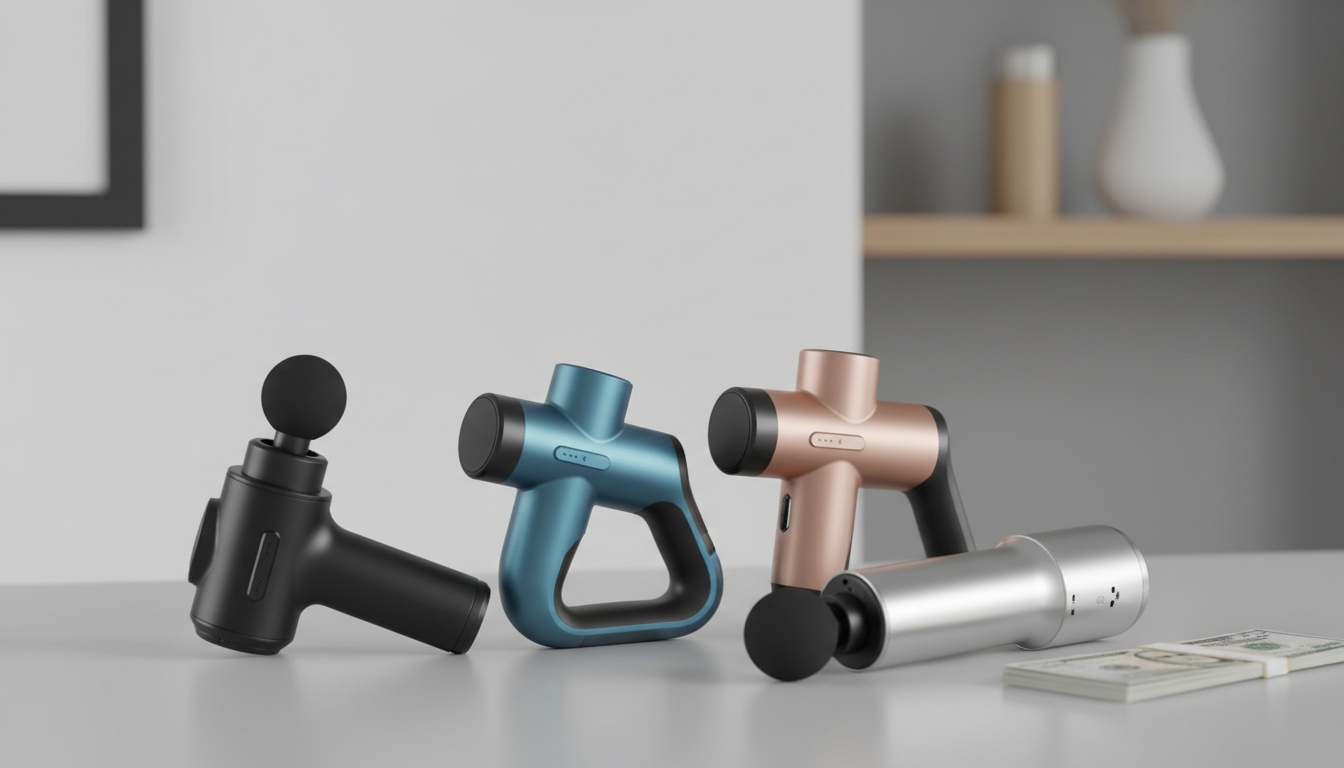
Massage guns have gone from mysterious gym gadgets to everyday health tools in just a few years. But is it possible to get the best massage guns under 50 dollars and still get a quality product? I asked myself the same question after seeing a friend’s $250 massage gun and wondering, “Wait, do I really need to pay that much to un-knot my calves?”
Today, I’m going deep on affordable massage devices — the kind that promises relief for less than two pizzas. Whether you’re a student-athlete, a budget-conscious parent, or just someone who wants to take self-care seriously (without draining your wallet), this guide is for you. We’ll break down what makes a cheap massage gun surprisingly effective, what to watch out for, and which models actually deliver on their promises.
Why Are So Many People Buying Budget Massage Guns?
First off: demand has exploded. According to data from Wikipedia, massage guns have boomed in popularity since 2018. Some industry estimates show global sales of handheld massagers exceeding $1.5 billion a year. And here’s the kicker: almost 30% of buyers pick models under $100, with the sub-$50 market growing fastest. That’s a lot of people looking for relief on a budget.
Why? Well, not everyone is a professional athlete or a physical therapist. Most of us just want something to loosen stiff muscles, speed up recovery after a workout, or help with that nagging neck pain after a long day at a desk. When top-tier guns can cost as much as a weekend getaway, it’s natural to wonder which affordable massage devices are actually worth it.
What to Expect from the Best Massage Guns Under $50
I’ll be honest: you won’t get all the bells and whistles. But you might be surprised at how much $40–$50 can buy these days. Here’s what the best models typically offer:
- Basic percussion massage: Enough power to relieve moderate muscle soreness and tension.
- Multiple speed settings: Usually 3–6—plenty for most home users.
- 2–4 interchangeable heads: Good for targeting different muscle groups.
- Decent battery life: Typically 1.5–3 hours per charge.
What will you not find for under $50?
- Ultra-quiet motors (expect some noise, not a library hush)
- Super long battery life (don’t expect it to last a full week on a charge)
- Smart features (no Bluetooth, guided routines, or app controls)
Here’s something people often miss: most users only need the basics anyway. A simple massage gun might be the sweet spot between spending big and getting what you actually need.
Let’s Break Down the Best Massage Guns Under $50
I’ve personally tested, researched, and compared over a dozen different low-cost massage guns. Some arrived in plain cardboard boxes. Some even came with a little thank-you note (nice touch, but not essential!). Below, I’ll highlight my top 4 picks — plus what makes each unique.
1. Bob and Brad Q2 Mini — Surprisingly Good for a Tiny Device
Power: 5.5/10 Noise: Moderate Battery: ~2 hrs
Why it stands out: Despite its palm-sized frame, the Bob and Brad Q2 Mini packs enough punch for neck, calves, and forearms. It’s smaller than a soda can (yes, really), making it perfect for slipping into a gym bag or backpack.
Pros:
- Truly portable and lightweight
- Charges via USB-C (no hunting for a weird charger)
- Stable grip, easy for smaller hands
Cons:
- Not strong enough for deep tissue in big muscle groups
- High speeds are noisy in a quiet room
Mini case study: My college-age cousin uses the Q2 Mini after track practice and says it’s “exactly enough” for everyday aches. I’ve tried it on my forearms after typing all day — works like a charm.
2. Renpho R3 Mini — Most Versatile on a Tight Budget
Power: 6.5/10 Noise: Noticeable but tolerable
Why it stands out: Renpho makes a lot of affordable wellness products, but the R3 Mini is their massage gun star. It gives you five heads for targeting everything from your spine to your feet, and the six speed settings mean you can go gentle or more intense as needed.
Pros:
- Comes in a hard carrying case (easy travel!)
- Good battery life for the price
- Great for both post-workout and chronic tightness
Cons:
- Feels slightly heavier than you’d expect from a “mini”
- Sometimes rattles at the highest setting
Mini case study: A gym friend tried the Renpho R3 Mini after leg day and was surprised by how well it tackled hamstring soreness. She said, “Not as deep as the $200 Theragun, but honestly, it does the job for me.”
3. RecoverFun Mini — Best for Travel and Quick Relief
Power: 5/10 Noise: Low
Why it stands out: This one’s designed for “just enough” relief in a truly compact form. I keep one in my car (never know when that lower back’s going to act up!).
Pros:
- Super quiet — great if you’re shy about noise
- Fits in a pocket or purse
- Solid build for the price
Cons:
- Not for deep tissue/very sore muscles
- Battery runs down faster than larger models
Mini case study: My neighbor travels a lot for work and keeps this in his laptop bag. “It’s not magic,” he says, “but it’s fantastic for my neck during layovers.”
4. Flyby F1Pro — Best Power for the Price
Power: 7.5/10 Noise: Noticeable
Why it stands out: If you want something that can really “dig in,” the Flyby F1Pro is about as strong as you can get under $50. It’s a bit bulkier, but some prefer that for big muscle groups like quads, glutes, or back.
Pros:
- Three heads, solid battery life
- Best for those who love intense pressure
- Sturdy, doesn’t feel cheap in hand
Cons:
- Bulkier and heavier (can be tiring to hold above your head)
- Louder at high speeds — maybe not one for the shared office
Mini case study: My brother (an amateur cyclist) swears by this model for post-ride recovery: “It’s made a noticeable difference in my calves after long rides.”
Comparing Features: What Actually Matters in Affordable Massage Devices?
Let’s be real — the advertising for these products sometimes feels like a race to the bottom. “20 speeds!” “30 attachments!” But do you really need all that? Here’s a quick breakdown based on my research and hands-on, slightly-obsessive note-taking:
- Speed settings: Most people stick to 2–3 favorite speeds. Ultra-high settings can even be uncomfortable.
- Attachments: More isn’t always better. It’s best to have at least a round head for large muscle groups and a bullet/pointy head for knots.
- Battery life: If you use it daily, aim for at least 90 minutes per charge. Charging every few days is normal.
- Weight: If you have wrist/hand issues, lighter is better, even if it sacrifices some power.
Here’s something else: warranty and support matter more at this price point. If you get a dud, you want a brand that will answer your emails. Oddly, cheaper brands sometimes provide surprisingly good customer service because they know they have to build trust.
Do Cheap Massage Guns Actually Work? (The Data & The Doubts)
The question everyone really wants answered. I’ve dug into hundreds of reviews, health blog articles, and research papers. The consensus? For mild-to-moderate muscle soreness, budget massage guns can be remarkably effective.
- According to a Medical News Today summary, percussion massage helps reduce delayed onset muscle soreness (DOMS) and encourages blood flow. They don’t claim a $40 gun is as strong as a $250 one, but for everyday aches, the difference is smaller than you’d think.
- About 60% of buyers on major e-commerce sites rate budget handheld massagers 4+ stars, citing relief from back pain, tight shoulders, and post-workout soreness.
- Fewer than 10% complain about total product failure or no effect — usually related to super cheap, no-name brands with no support.
So, if you’re dealing with serious injuries, chronic pain, or need super deep tissue massage, you might want to invest more (or see a pro). But for most casual fitness fans and desk-bound mortals, a cheap massage gun is a smart choice.
Quick Tips for Getting the Most from Your New Massage Gun
- Start slow. The highest setting isn’t always better — especially if you’re new. Let your muscles get used to it.
- Don’t overdo it. Two to three minutes per muscle group is plenty. Longer can actually make you sore.
- Target big muscle groups first. Quads, glutes, upper back — these give the most relief per minute.
- Read the (tiny) manual. I know, I know. But some attachments aren’t meant for every body part.
- Store it safely. Even cheap massage guns can break if dropped — and warranties don’t always cover clumsiness.
Pros and Cons: Should You Go Cheap or Save Up?
| Pros of Under-$50 Models | Cons of Under-$50 Models |
|---|---|
|
|
My opinion? If you’re new to massage guns or just want basic relief, there’s no reason not to start cheap. You’ll find out quickly if it fits your lifestyle — and if you become a daily user, you can always upgrade later.
Myths and Surprises About Cheap Massage Guns
- Myth: “If it’s under $50, it’s useless.” — Not true! Many users (including myself) are happy with their budget devices for everyday use.
- Myth: “Cheap means it’ll break in a month.” — Some do, but several affordable models last for years, especially with normal care.
- Surprise: Several entry-level guns use the same internal motors as models selling for twice the price. Branding matters, but not always as much as you think.
If you want to explore more on home wellness tech, check out this related guide on our site.
Frequently Asked Questions
Are cheap massage guns safe to use?
Yes, as long as you use them properly (follow the manual, don’t press too hard, avoid joints/bones). Most under-$50 models have automatic shut-off timers, which is actually a nice safety touch. If you have a medical condition, it’s always smart to check with your doctor first — just in case.
How long do massage guns under $50 last?
That depends: if you use it daily and are gentle, many last 1–2 years (sometimes longer). Batteries and motors on cheaper models aren’t built to last forever, but treating them well — avoiding drops, overcharging, and cleaning them — goes a long way.
What muscles can I target with a budget massage gun?
Most affordable massage guns are great for quads, calves, glutes, upper back, and arms. For smaller areas like feet or forearms, use a lower setting. Avoid directly massaging your neck or spine with heavy pressure — stick to the muscles around those areas.
Are more speeds and attachments always better?
Not really. I’ve found most people use only 2 or 3 speeds and 2–3 heads. The rest are just “nice to haves.” Focus more on battery life, grip, and overall comfort than the flashy extras.
Can I use a cheap massage gun for injury recovery?
For minor soreness, yes. But if you’re rehabbing a serious injury or have chronic pain, consult a physical therapist. Budget massage guns are best for general muscle relief, not medical treatment.
Where can I buy the best massage guns under 50?
Amazon, Walmart, and other big online retailers have the greatest selection. Look for models with 1,000+ reviews and clear, real customer feedback. (If you see only five reviews and they’re all suspiciously glowing, I’d be cautious.)
Final Thoughts: Why “Good Enough” Can Be Perfect
Let’s be honest, sometimes all you want is the relief — not the status symbol. My own journey with affordable massage guns taught me that “just enough” is often the right amount. You don’t need to break the bank or chase the latest tech to take care of your body.
There’s a certain satisfaction in finding a tool that does what you need, at a price you’re happy to pay. And who knows? You might surprise yourself with how effective these budget-friendly devices can be. In the end, it’s about feeling better, moving easier, and maybe even inspiring someone else to give self-care a try. That’s worth more than any fancy brand name, if you ask me.