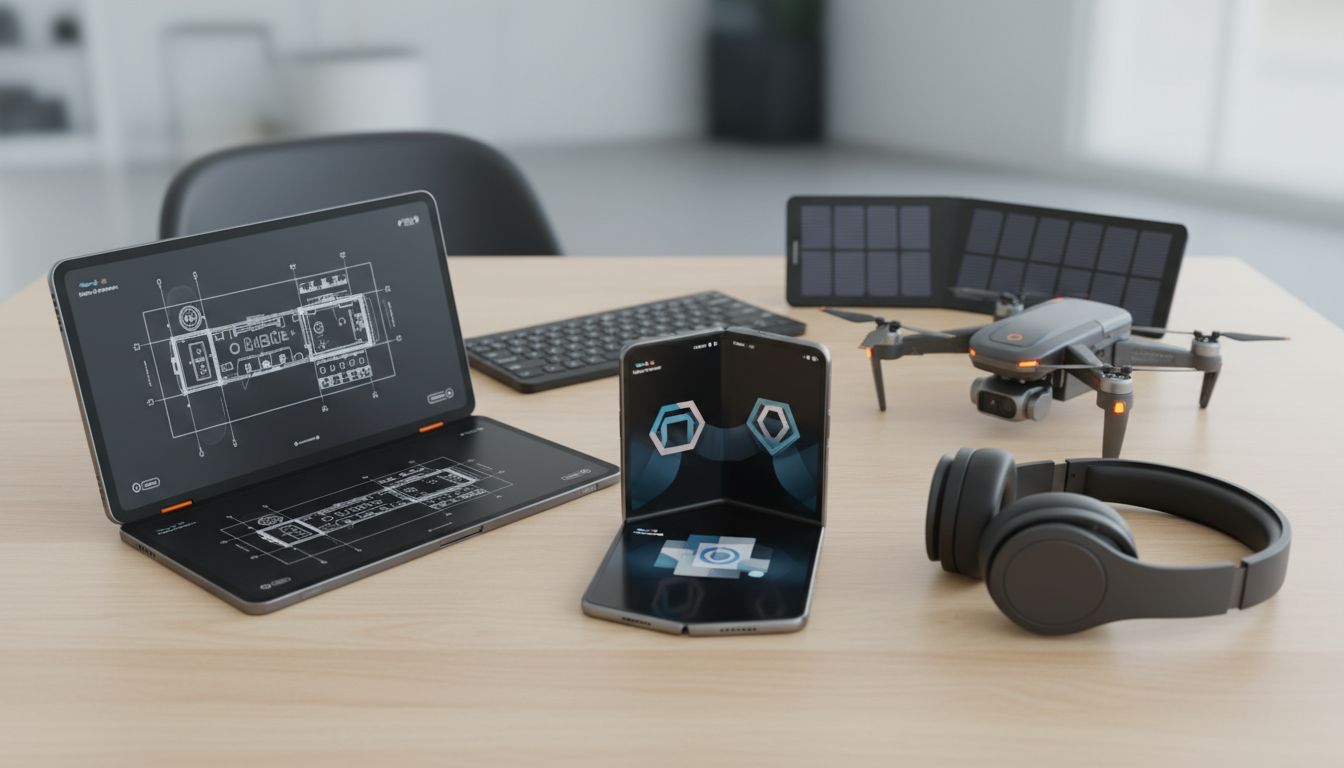
Think about the last time you packed your bag for school, work, or a quick weekend trip. Did you ever wish your phone, tablet, or even your keyboard could just fold in half and save some space? You’re not alone. The rise of the best foldable tech gadgets isn’t just some passing trend — it’s a signal that our relationship with technology is changing. Our devices are getting smarter, but also (finally!) more adaptable to our real, messy, on-the-go lives.
In this article, I’m not just rattling off a list of folding phones or bendable screens. We’ll explore why foldable tech is booming, break down the pros and cons, and dig into which gadgets are leading the pack. Expect real-world examples, stats, mini-stories, and even a myth-busting section. I admit, some of these devices blew my mind for both cleverness and practicality. Ready to see what’s possible when tech gets flexible?
Why Foldable Gadgets? The Human Case for Flexible Tech
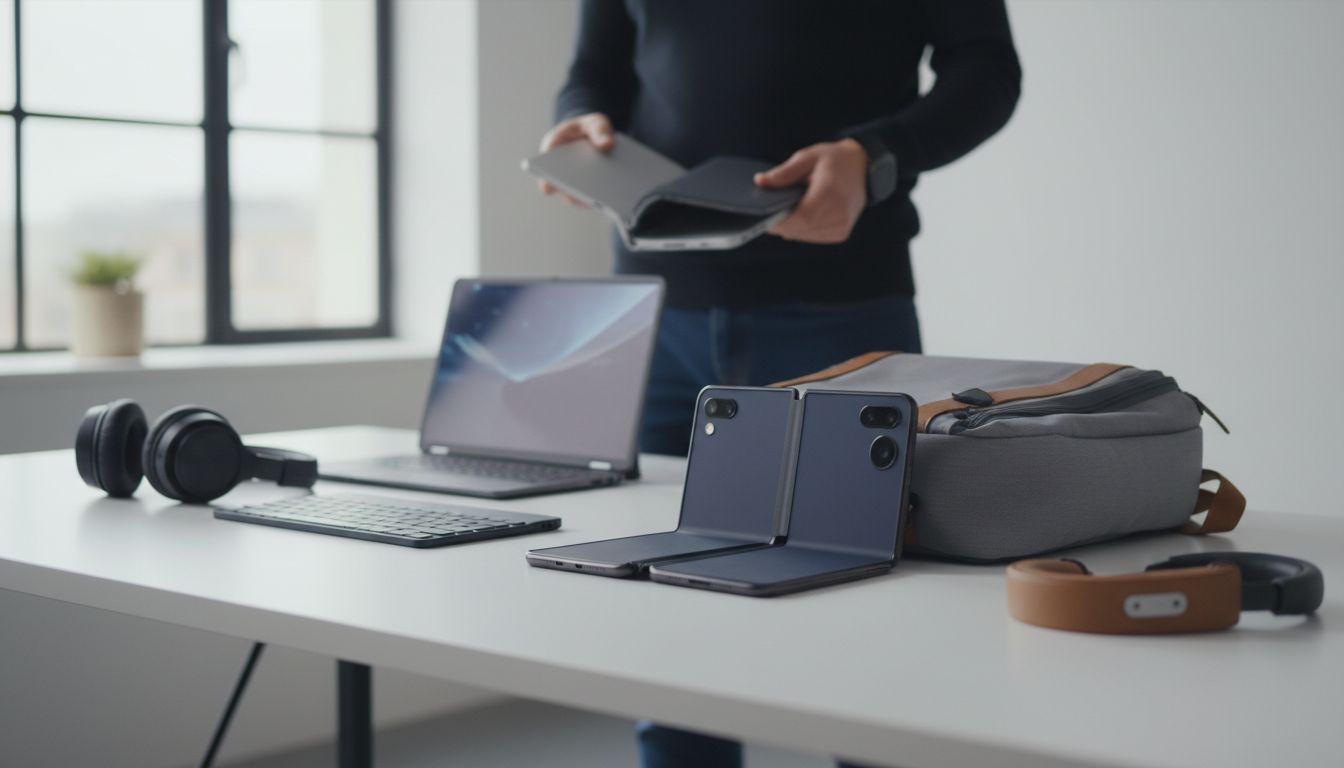
Let’s be honest: tech used to be anything but flexible. Remember those ancient laptops that weighed as much as a dog? I do. And don’t get me started on trying to jam a full-sized tablet into a backpack already stuffed with books and snacks.
But here’s the thing: as our daily lives get busier and our spaces more cramped, people crave gadgets that adapt. According to a Statista report, the global foldable smartphone market alone reached $18 billion in 2023 and is forecast to almost double by 2027. That’s a lot of people betting that folding, bending, and flexing aren’t just party tricks—they’re practical solutions.
Foldable devices mean bigger screens without extra bulk, keyboards that fit in your pocket, and even laptops that squish into a messenger bag with room to spare. Is this just about coolness? Hardly. It’s about convenience, efficiency, and, honestly, a little bit of wow-factor.
Table of Contents
- Top 7 Best Foldable Tech Gadgets (With Real-Life Use Cases)
- Beyond Foldable Smartphones: Surprising Flexible Gadgets
- Foldable Tech: Pros, Cons & The Unexpected Middle Ground
- Mythbusters: Clearing Up Foldable Gadget Misconceptions
- FAQ: Questions People Actually Ask About Foldable Technology
- A Human Reflection — Why Foldable Gadgets Matter
Top 7 Best Foldable Tech Gadgets (With Real-Life Use Cases)
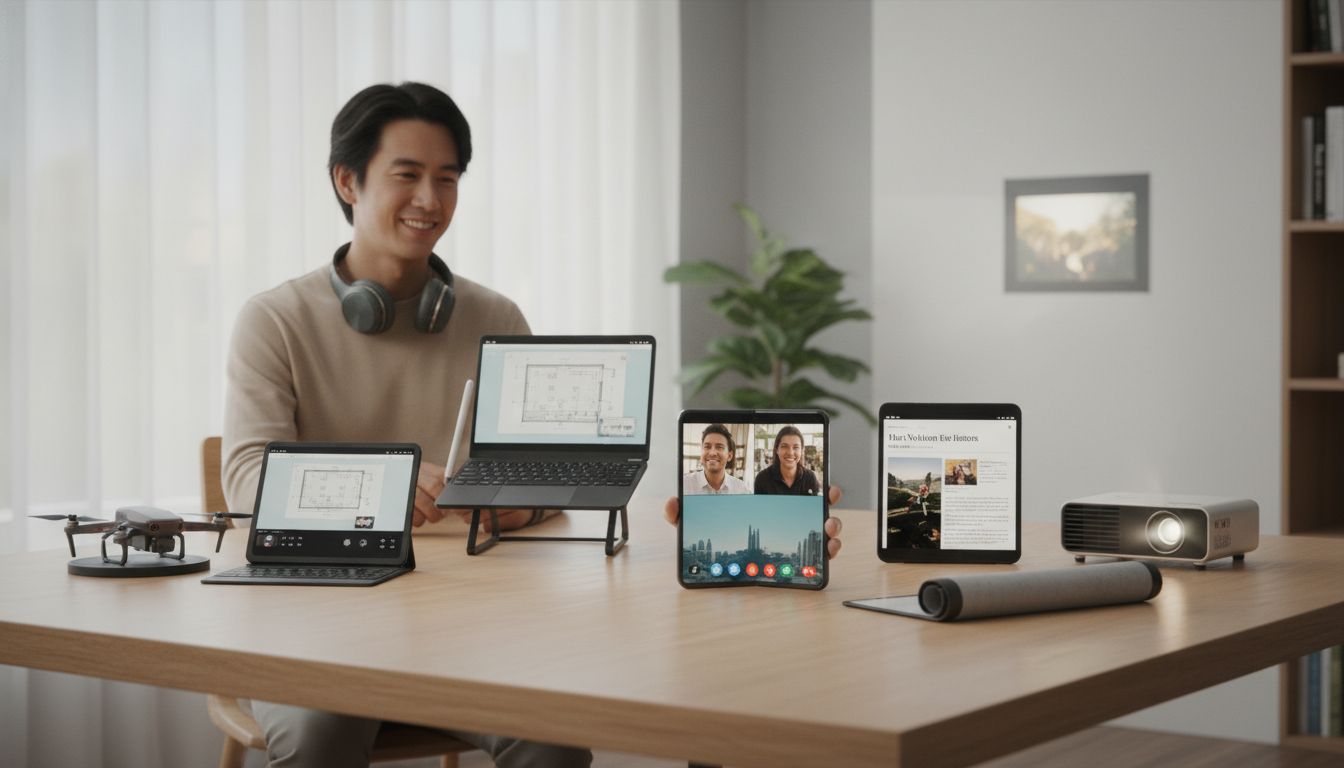
Let’s break this down — not just with specs, but with the kinds of scenarios where these gadgets shine. For each, I’ll share why it’s made the cut and how it stacks up in the everyday world.
-
Samsung Galaxy Z Fold5
The folding phone that thinks it’s a tablet.If you want a phone that transforms into a mini cinema, the Z Fold5 is the one. It’s got a 7.6-inch display when opened — that’s bigger than most paperback books. I once watched a whole soccer match on a friend’s Fold and, honestly, forgot I wasn’t on my living room TV. The multitasking is no hype: you can message, video chat, and browse all at once. Downsides? Price (around $1,800 new) and a delicate screen. But if you want flagship performance in a flexible shell, it’s the gold standard.
-
Lenovo ThinkPad X1 Fold (Gen 2)
The world’s first truly foldable PC — and it’s not a gimmick.This 16-inch OLED laptop folds into a package that slips into most briefcases. It’s light (just over 2.8 lbs), and when you show up at a coffee shop and unfold this beast, people gawk. I saw someone use it to present a project at a school science fair — both as a tablet for drawing and a mini-laptop for typing. Battery is a bit average, but the innovation is hard to beat.
-
Motorola Razr+ (2024)
For nostalgia buffs who demand modern tech.The Razr+ proves that foldable smartphones aren’t just giant tablets. Folded, it’s tiny—like, jean pocket tiny. But the external display is shockingly useful (music controls, notifications, even selfies). It’s ideal if you want a phone that doesn’t dominate your hand or bag. Plus, it gets more than a day of battery life, which surprised me.
-
Royole FlexPai 2
The original foldable tablet—still impressively quirky.Royole doesn’t get as much press, but their FlexPai 2 was an early pioneer. At around $1,300, it offers a folding 7.8-inch screen, and the “outie” fold means you see the display even when shut. Some find the hinge a bit clunky, but it’s rugged, and the tech is surprisingly mature. At a conference, I watched a graphic designer sketch directly on its flexible screen—she loved not needing a separate tablet and laptop.
-
Logitech K780 Multi-Device Foldable Keyboard
Don’t underestimate the humble foldable keyboard.This keyboard isn’t flashy, but if you travel or switch between devices (laptop, phone, tablet), it’s a lifesaver. It folds up, fits in your jacket pocket, and lets you type like a regular computer. For remote work or students juggling screens, the productivity boost feels real. I’ve used one on a crowded train — no regret.
-
Bose QuietComfort Ultra Foldable Headphones
Yes, sound can be flexible too.Nearly 30% of all premium headphones sold in 2023 had a fold-flat design. Why? If you’ve ever tried to fit headphones in a small bag, you know. The QuietComfort Ultra headphones offer world-class noise cancellation and fold down to half-size. In airports, I’ve seen travelers snap these in seconds and slide them into pockets. Portable, tough, and sound quality that’s genuinely impressive.
-
Lenovo Yoga Book 9i
Not a true “bendable” device, but the ultimate 2-in-1 foldable laptop.The Yoga Book 9i isn’t a single folding screen, but rather dual OLEDs that hinge like a book. For students, writers, and artists, the flexibility is real: tablet mode for sketching, laptop mode for typing, or “tented” for movies. The stylus works perfectly across both screens. Cool fact: more than 40% of new laptops in 2024 are expected to have some kind of foldable or dual-screen flexibility.
Beyond Foldable Smartphones: Surprising Flexible Gadgets
I sometimes wonder: are foldable gadgets just about making phones cooler? The answer is a resounding nope. Let’s look at a few wild examples of foldable tech out in the world—and where they’re quietly changing lives.
- LG Rollable OLED TV – This TV literally rolls up into a box when not in use. No more ugly black screens messing with your home decor.
- Paperlike Foldable E-Ink Tablets – For avid readers and note-takers, these mimic real paper and fold like a notebook, perfect for school or meetings.
- Folding Electric Scooters – Over 60% of urban e-scooters sold today feature foldable frames, making them a favorite for city commuters.
- Bendable Solar Panels – Lightweight, rollable solar mats power campsites, boats, or emergency setups.
Here’s something people often miss: foldable tech isn’t just about electronics. Even camping gear, like pop-up tents or chairs, uses the same principles. What unites all these gadgets is the idea that tech shouldn’t be rigid — it should fit our lives, not the other way around.
Foldable Tech: Pros, Cons & The Unexpected Middle Ground
Let’s Be Honest: Folding Isn’t Magic
I gotta admit, the “wow” moment when you unfold a huge screen from what looked like a normal phone is cool. But don’t let the excitement blind you — there are real pluses and minuses. Let’s break it down.
Pros
- Space Efficiency: A large screen in a tiny pocket? Yes please.
- Multitasking: Open two or more apps side-by-side—great for students, professionals, or even just doomscrolling and chatting.
- Conversation Starter: Don’t underestimate the fun of showing off your folding device at a party (or in class, if you want to see everyone’s eyes widen).
- Adaptability: Need e-book mode, laptop mode, or tent mode? Foldables offer it all.
Cons
- Durability: Hinges, flexible screens, and moving parts are more likely to break. One study found foldable phones fail 25% more often than traditional ones after two years.
- Price: Most folding gadgets are still premium. Expect to pay 30-50% more than non-folding equivalents.
- App Compatibility: Not all apps play nice with strange screen shapes (though it’s improving fast).
- Battery Life: Larger screens eat more power. Foldables are catching up, but it’s a challenge.
The middle ground? In my experience, if you’re the type who always protects gadgets with cases and handles them gently, foldables will treat you well. If you’re rough or need absolute ruggedness, maybe wait a generation or two.
Mythbusters: Clearing Up Foldable Gadget Misconceptions
-
Myth: Foldable screens crease and crack immediately.
Truth: Most modern foldables withstand over 200,000 folds (that’s about 5 years of heavy use). The “crease” is visible but rarely causes problems in daily life. -
Myth: Foldables are just gimmicks for tech nerds.
Truth: Adoption is spreading. By 2025, foldable phones could make up 8% of all smartphone sales—a small but growing share. -
Myth: They’re not practical for work or study.
Truth: I’ve watched designers, students, and business leaders seamlessly use foldables for note-taking, sketching diagrams, and multitasking with real productivity gains. -
Myth: Foldable gadgets are too fragile for kids or teens.
Truth: With proper care, some models are surprisingly tough. (Case in point: my 13-year-old cousin’s Razr+ has survived six months with only minor scratches!)
Quick Tips: How to Make Your Foldable Tech Last (From Real Users)
- Always close gently — Don’t slam shut; hinges can wear out.
- Use a case — Many companies now make specialty cases for foldables.
- Keep it clean — Dust and sand are hinge enemies. Wipe regularly.
- Don’t over-bend — Only fold along the designed axis. (Don’t try to get “creative”!)
- Avoid liquids — Most foldables aren’t fully waterproof…yet.
FAQ: Questions People Actually Ask About the Best Foldable Tech Gadgets
Are foldable smartphones really worth the price?
They can be—if you value multitasking and want a big screen in a pocketable form. For casual users, the price is still a hurdle, but as prices drop (by about 15% a year, on average), they’ll only get more accessible.
How long do folding gadget hinges last?
Most major brands (like Samsung and Lenovo) claim their hinges last at least 200,000 folds. That’s five years of opening and closing 100 times per day! In practice, normal use hardly wears them out before you’d want a new upgrade anyway.
Is there a real difference between “foldable” and “flexible” tech?
Good question! “Foldable” usually means there’s a clear hinge or axis (like a book). “Flexible” can mean devices that roll, bend, or even twist. Both are part of the same trend—making tech fit real life better.
Are foldable gadgets more eco-friendly?
It’s complicated. Folding tech can reduce the number of devices you need (one foldable instead of a phone and a tablet), but manufacturing flexible screens is energy-intensive. Some companies are exploring recycled materials, but there’s a long way to go.
What’s the biggest risk with foldable technology?
Usually, it’s physical damage to the screen or hinge. Luckily, newer models are far tougher than early versions, but they’re still not invincible. Treat them with care, and they’ll last!
Can students benefit from foldable gadgets?
Absolutely! Whether it’s taking notes on a foldable tablet, sketching diagrams, or reading on a phone that opens into a mini-book, foldables offer legit productivity benefits for learners. But as with any pricey gadget, keep them safe.
A Human Reflection — Why Foldable Gadgets Matter
As I finish writing this, I can’t help but think about all the ways tech in my own life has gotten friendlier—more adjustable to me, not the other way around. That’s what the best foldable tech gadgets really represent: a shift from rigid rectangles to devices that actually fit how (and where) we live. It’s about more than showing off to friends (though, let’s be honest, that’s fun too). It’s about a future where tech is an extension of our space, not an obstacle in it.
Sure, maybe not everyone needs a phone that turns into a small tablet, or a laptop that folds like a hardcover book. But that’s the beauty of innovation: it starts as a luxury, and before long, it’s the new normal. If you’re curious, maybe try one out at a local tech store. Open and close it a few times. See how it feels. I bet you’ll start picturing new ways tech could fit your life, too. And isn’t that what all good gadgets should do — fold into our routines, not the other way around?
(And, let’s face it, future archaeologists are going to have a blast digging these up and trying to figure out what we were up to. But that’s a story for another day.)